According to the joint report "Maize Sector in India – Navigating Transformation in Demand–Supply Dynamics" by FICCI and YES Bank, India's maize sector is undergoing a historic and strategic transformation.
Traditionally considered a staple cereal, maize has now become a strategic crop for India's agricultural economy due to its increasing use in ethanol blending, poultry feed, and industrial processing.
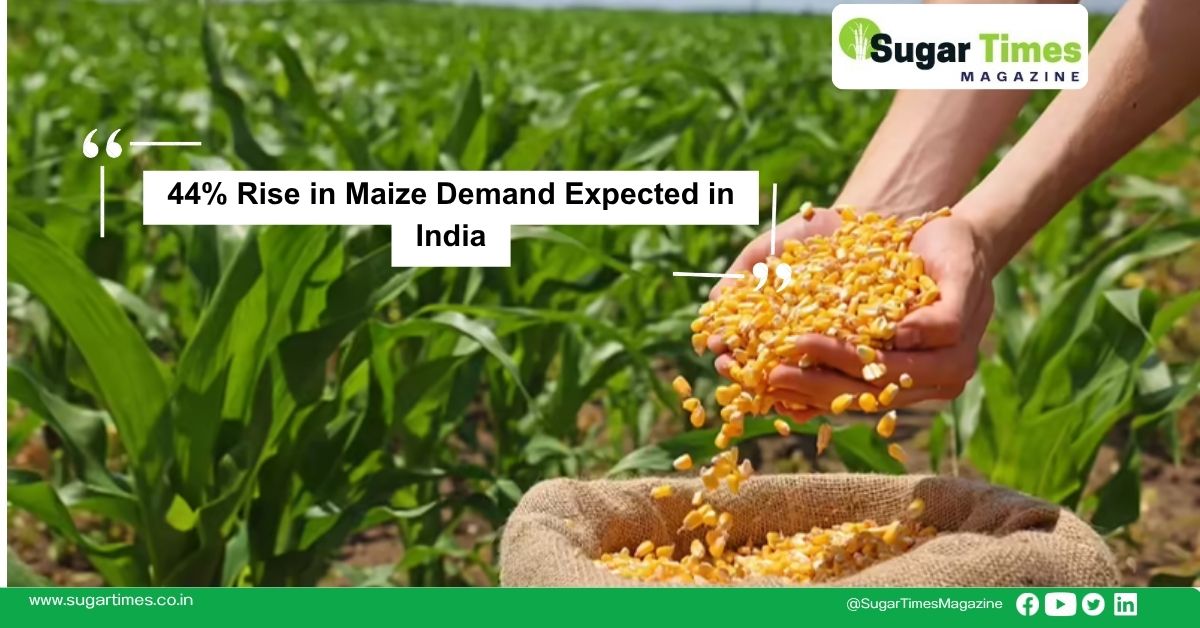
The report estimates that India's domestic demand for maize will increase by 44%, from around 50 million tonnes (2025–26) to 72 million tonnes (2030–31). This rapid growth is mainly driven by rising industrial demand and the expansion of the biofuel sector.
Significant Growth in Maize Production
Over the past decade, India has made remarkable progress in maize production.
- 2015–16: 22.57 million tonnes
- 2025–26: Nearly 50 million tonnes (more than double)
During this period:
- Cultivated area under maize grew by 4.5% annually.
- Total maize production increased by 8.3% annually.
Currently:
- Maize contributes about 14% of India's total food grain production.
- Around 17 million farmers across 27 states cultivate maize.
- After rice and wheat, maize has become India's third-largest cereal crop.
- Globally, India ranks 4th in maize cultivation area and 5th in maize production.
Ethanol Blending Driving Demand
Government policies promoting ethanol blending have transformed maize into the primary feedstock for ethanol production, replacing sugarcane and rice to a large extent.
Key figures:
- 2024–25: About 12.5 million tonnes of maize were used for ethanol production.
- This accounted for 50% of the raw material used by the ethanol industry.
- By 2030–31, the ethanol industry alone is expected to require 20–25 million tonnes of maize.
Poultry and Animal Feed Industry
The poultry and livestock sectors are the largest consumers of maize.
- Around 54% of total domestic maize consumption goes into animal feed:
- 44% for poultry feed.
- 10% for livestock feed.
- Because maize is rich in energy, it forms 60–65% of poultry feed formulations.
Starch and Processed Food Industry
The starch industry processes approximately 700,000 tonnes of maize every year.
Demand is also increasing from industries such as:
- Pharmaceuticals
- Paper manufacturing
- Textiles
- Biodegradable plastics
- Ready-to-eat foods such as popcorn and snack products
Major Challenges
Despite rising demand, India faces several serious challenges.
Low Productivity
- India's average maize yield (2025–26):
- 3.7 tonnes per hectare
- Global average:
- 6.04 tonnes per hectare
However, some states perform exceptionally well:
- Andhra Pradesh: 6.8 tonnes/hectare
- West Bengal: 6.9 tonnes/hectare
Reasons for Low Productivity
- Heavy dependence on rain-fed agriculture
- Limited farm mechanization
- Low adoption of improved hybrid seeds
- Inadequate scientific drying and moisture management after harvest
- Lack of modern storage infrastructure
Roadmap for a "New Maize Revolution"
The report recommends five key measures:
- Increase productivity through improved hybrid seeds and mechanization.
- Reduce post-harvest losses by adopting scientific drying methods and modern storage facilities.
- Improve grain quality through aflatoxin management and strict quality testing.
- Ensure a stable and uninterrupted supply of maize for industries.
Maintain policy balance between food security, animal feed requirements, and ethanol production.