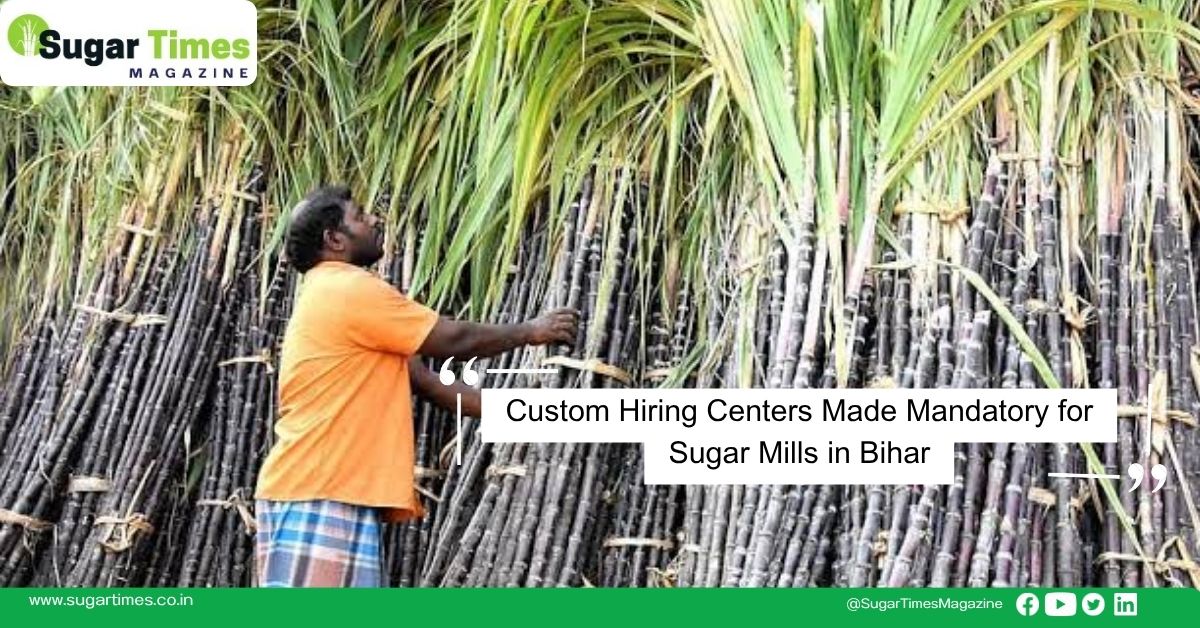
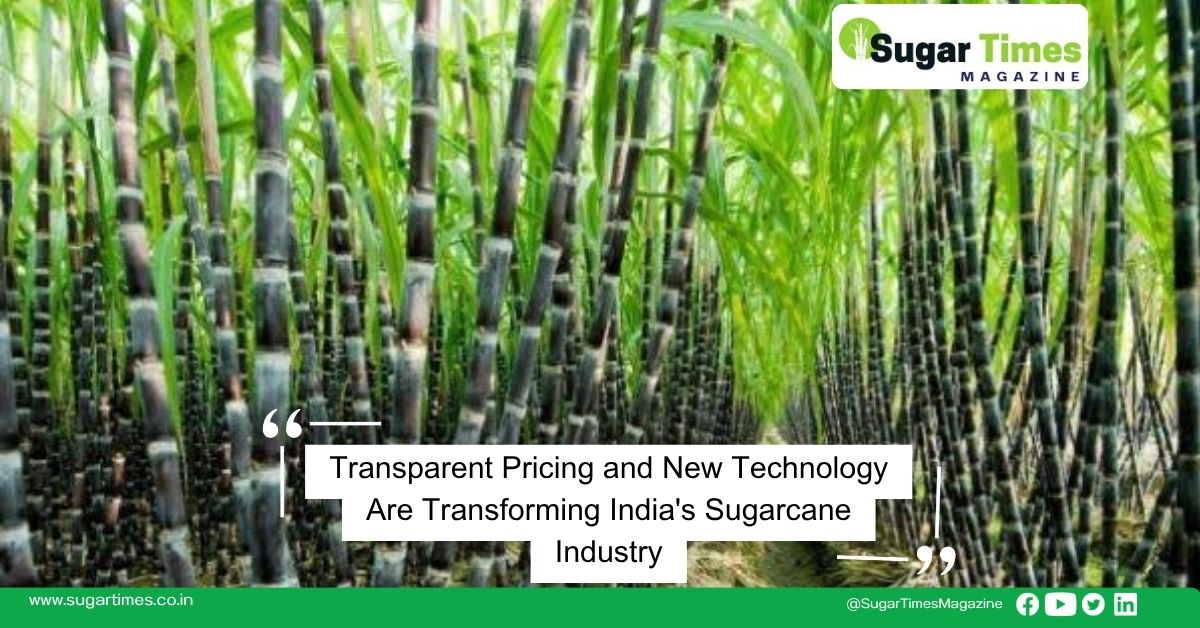
In India, sugarcane is not just a crop—it is the primary source of livelihood for millions of farmers and agricultural workers.
The country produces over 450 million tonnes of sugarcane every year, making it one of the world's leading sugarcane producers.
Experts believe that merely increasing production is not enough. A sustainable system is needed that balances:
- Farmers' income,
- The strength of the sugar industry,
- India's energy security.
Fair and Remunerative Price (FRP): Providing Security to Farmers
The Fair and Remunerative Price (FRP) system acts as a safety net for sugarcane farmers.
It guarantees a minimum assured price for sugarcane, reducing the impact of fluctuations in market prices.
Timely payments encourage farmers to adopt:
- Better-quality seeds,
- Modern technologies,
- Scientific farming practices.
Towards Sustainable Sugarcane Cultivation
Sugarcane is widely regarded as a water-intensive crop, putting pressure on groundwater resources in many regions.
Experts now recommend linking prices more closely to sugar recovery rates, which would encourage farmers to grow higher-quality cane capable of producing more sugar with less water.
The adoption of modern techniques is also increasing, including:
- Drip irrigation,
- Moisture management,
- Balanced fertilizer application.
These practices help improve productivity while conserving water.
Ethanol and Bioenergy Creating New Opportunities
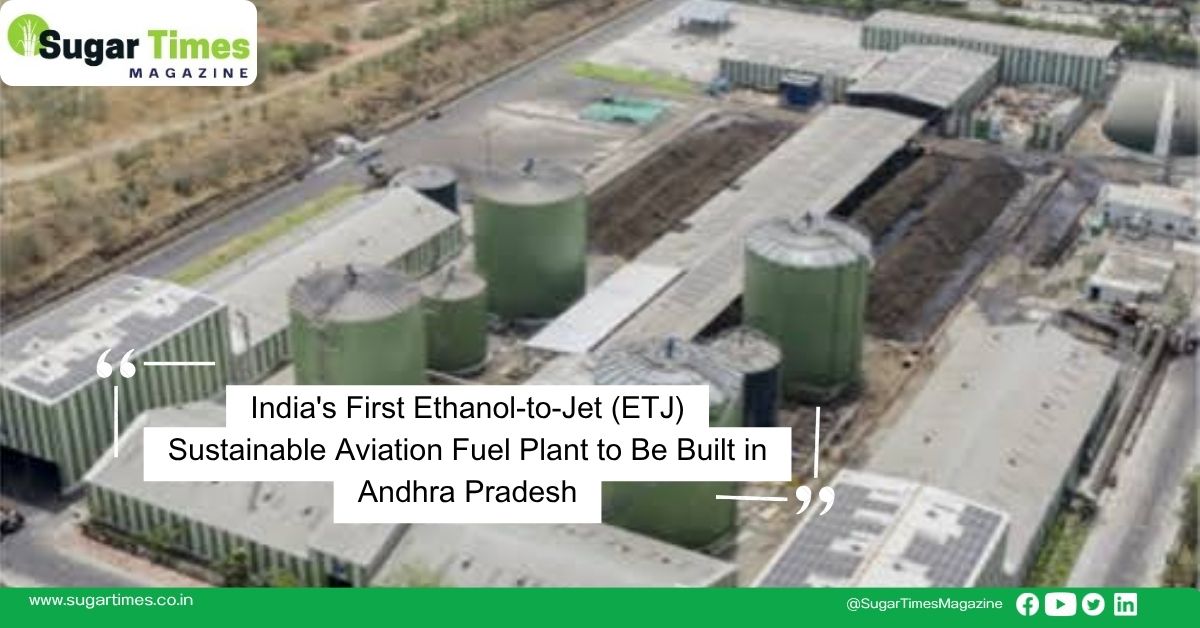
The Government of India's Ethanol Blended Petrol (EBP) Programme has opened new avenues for the sugar industry.
Today, sugarcane is used not only to produce sugar but also to manufacture:
- Ethanol,
- Electricity,
- Other bioenergy products.
By-products such as:
- Molasses,
- Bagasse,
are increasingly being utilized for energy production, creating additional sources of income for both farmers and sugar mills.
Balanced Policies Will Shape the Future
According to experts, the future success of India's sugarcane sector depends on maintaining a balance among:
- Farmers,
- Sugar mills,
- Government policies.
Farmers need timely and fair payments, while industries require a stable policy environment that encourages investment in:
- New technologies,
- Capacity expansion,
- Modernization.
If this balance is maintained, the sugarcane sector can strengthen:
- India's rural economy,
- Green energy production,
- Sustainable agriculture.
Government Withdraws the Draft Sugar (Control) Order, 2026
Following strong opposition from state governments and various stakeholders, the Central Government withdrew the draft "Sugar (Control) Order, 2026" with immediate effect.
The Ministry of Consumer Affairs, Food and Public Distribution stated through an official notification that, based on the suggestions and objections received, it was necessary to review the proposed policy before proceeding further.
Why Was the Draft Opposed?
The draft order had been introduced to replace the 60-year-old Sugar (Control) Order, 1966.
Its major proposal was to bring the following sectors under stricter government regulation:
- Unorganized jaggery units,
- Khandsari sugar units,
- The ethanol sector.
This proposal faced significant resistance from industry stakeholders and state governments.
The "All-in-One" Integrated Model
Many modern sugar mills in India are now operating on an integrated model, where they simultaneously produce:
- Sugar,
- Ethanol,
- Electricity.
This integrated approach:
- Improves resource utilization,
- Increases profitability,
- Reduces waste,
- Enhances operational efficiency.
Experts believe that in the coming years, the bioenergy sector will play a major role in strengthening India's energy self-reliance.