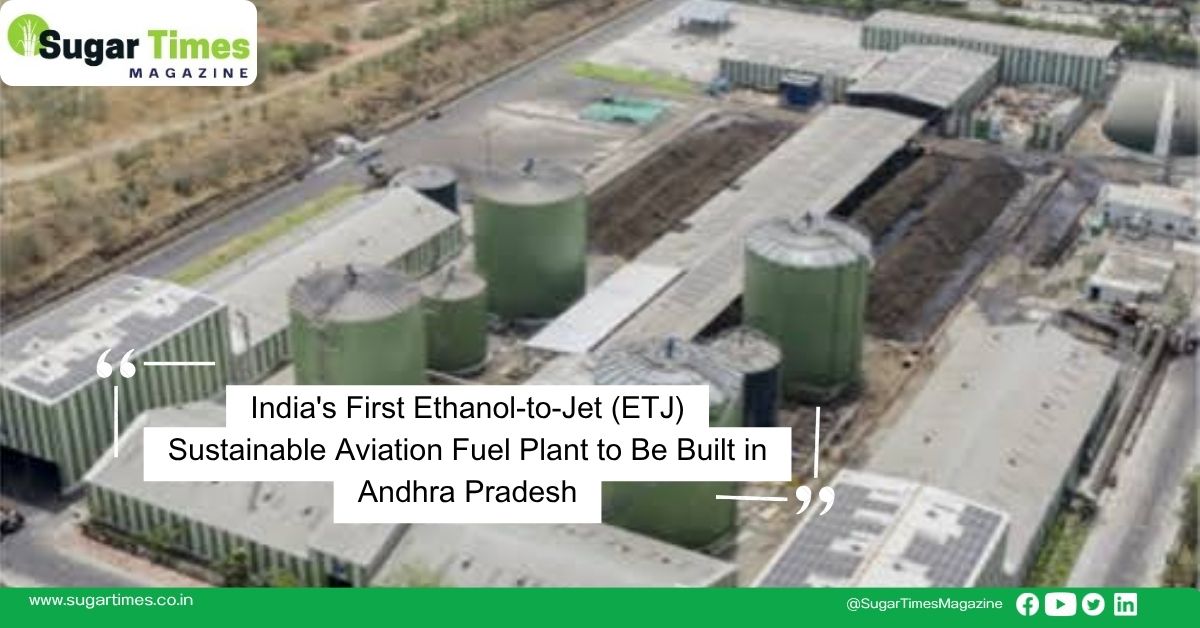
After receiving the Engineering, Procurement, and Construction (EPC) contract from NTPC Limited, GPS Renewables has begun construction of India's first Ethanol-to-Jet (ETJ) Sustainable Aviation Fuel (SAF) plant.
The project is being developed at the APIIC Industrial Area, Atchutapuram, Andhra Pradesh, as part of NTPC Green Energy Limited's Green Hydrogen Hub.
Its primary objective is to promote domestic production of Sustainable Aviation Fuel (SAF) and strengthen India's clean aviation fuel ecosystem.
The project involves several technology partners:
- Lummus Technology will provide the ETJ technology and basic engineering.
- ZyTEL India will undertake detailed engineering.
- GPS Renewables will manage the overall project, including:
- Engineering,
- Procurement,
- Construction,
- Plant start-up,
- Commissioning.
The project is scheduled for completion by March 2029, followed by one year of operational support.
Reducing Carbon Emissions
According to the company, Sustainable Aviation Fuel (SAF) is one of the most effective solutions for reducing carbon emissions from the aviation sector.
The project is expected to strengthen:
- India's biofuel industry,
- Green energy infrastructure,
- Low-carbon aviation sector.
How Will the Jet Fuel Be Produced?
The plant will produce approximately 1,800 tonnes of Sustainable Aviation Fuel every year.
The production process involves:
- Ethanol produced from captured carbon dioxide (CO₂).
- Conversion of ethanol into ethylene.
- Oligomerization of olefins.
- Hydroprocessing, resulting in:
- Sustainable Aviation Fuel (SAF),
- Renewable diesel.
Andhra Pradesh Chief Minister Seeks 40% Ethanol Blending
Andhra Pradesh Chief Minister N. Chandrababu Naidu has urged the Central Government to increase ethanol blending in petrol from the current 20% to 40%.
While meeting the Union Petroleum Minister, he stated that he had also submitted an official letter requesting this change.
Citing examples of countries such as Brazil, he argued that higher ethanol blending would:
- Strengthen India's energy security,
- Reduce dependence on imported crude oil,
- Increase domestic biofuel production.
Economic Benefits of the Ethanol Programme
The Chief Minister highlighted the achievements of the existing ethanol blending programme.
According to him, the programme has:
- Saved approximately ₹1.1 lakh crore in foreign exchange by reducing crude oil imports.
- Reduced carbon emissions by around 5 million tonnes (50 lakh tonnes).
- Generated an additional ₹87,558 crore in income for farmers across India.
He further argued that increasing ethanol blending to 40% would substantially increase demand for agricultural produce, particularly maize, thereby significantly improving farmers' incomes.
Challenges Faced by Maize Farmers
The Chief Minister also highlighted the difficulties faced by maize farmers in Andhra Pradesh.
Although the state is one of India's leading maize producers, farmers are not receiving the Minimum Support Price (MSP) of ₹2,400 per quintal.
Due to inadequate government procurement, open market prices have fallen to around:
- ₹1,700–₹1,800 per quintal,
forcing farmers to sell below the MSP and incur significant losses.
Appeal for an Early Decision
To address farmers' problems and boost maize demand, the Chief Minister urged the Central Government to take an early decision on increasing ethanol blending.
He emphasized that he had already raised this issue during his recent visit to New Delhi, including discussions with senior Union leaders, stressing the urgency of the matter.