Major Boost for Biofuels and Agricultural Waste-to-Energy Initiatives
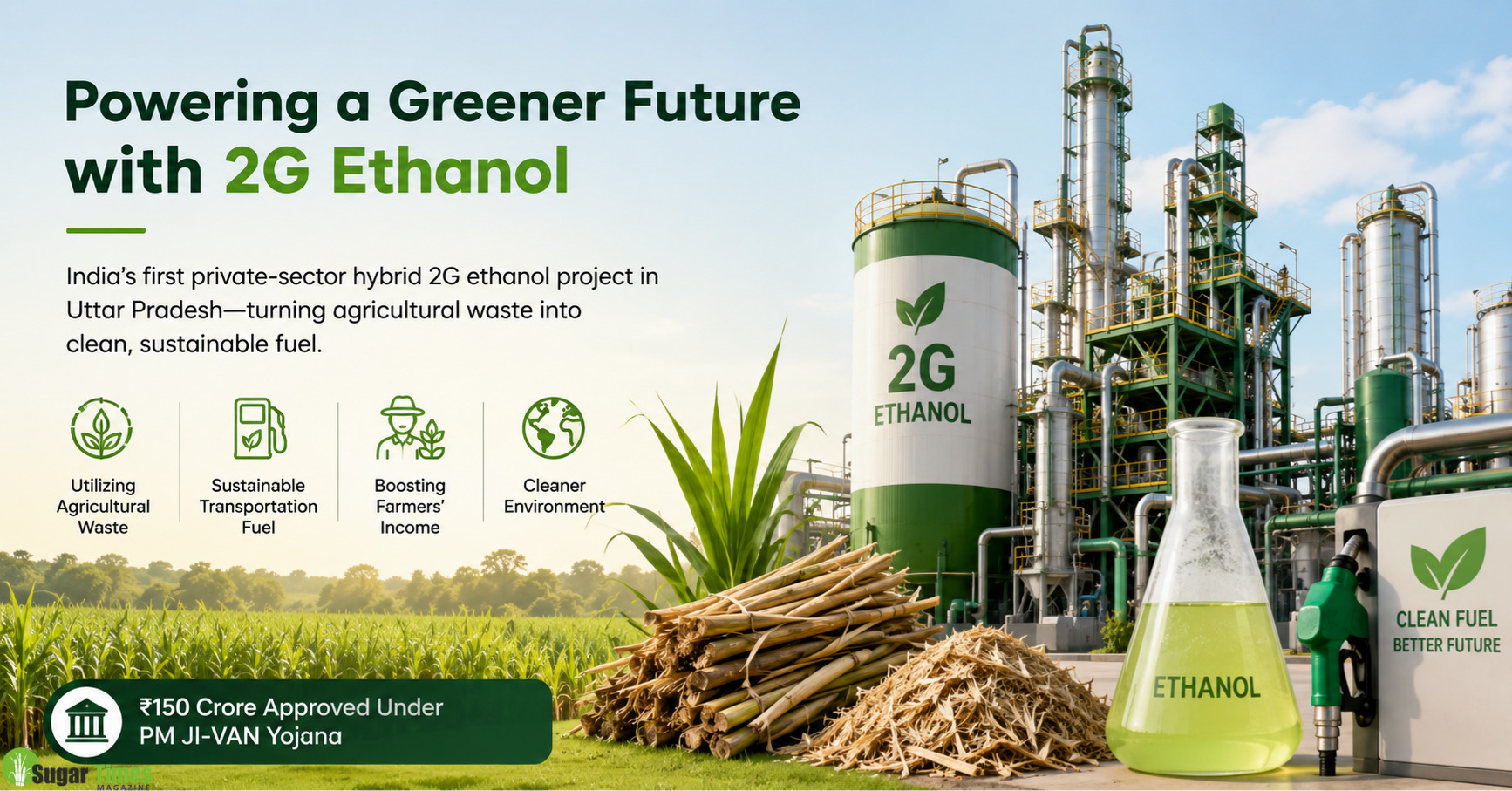
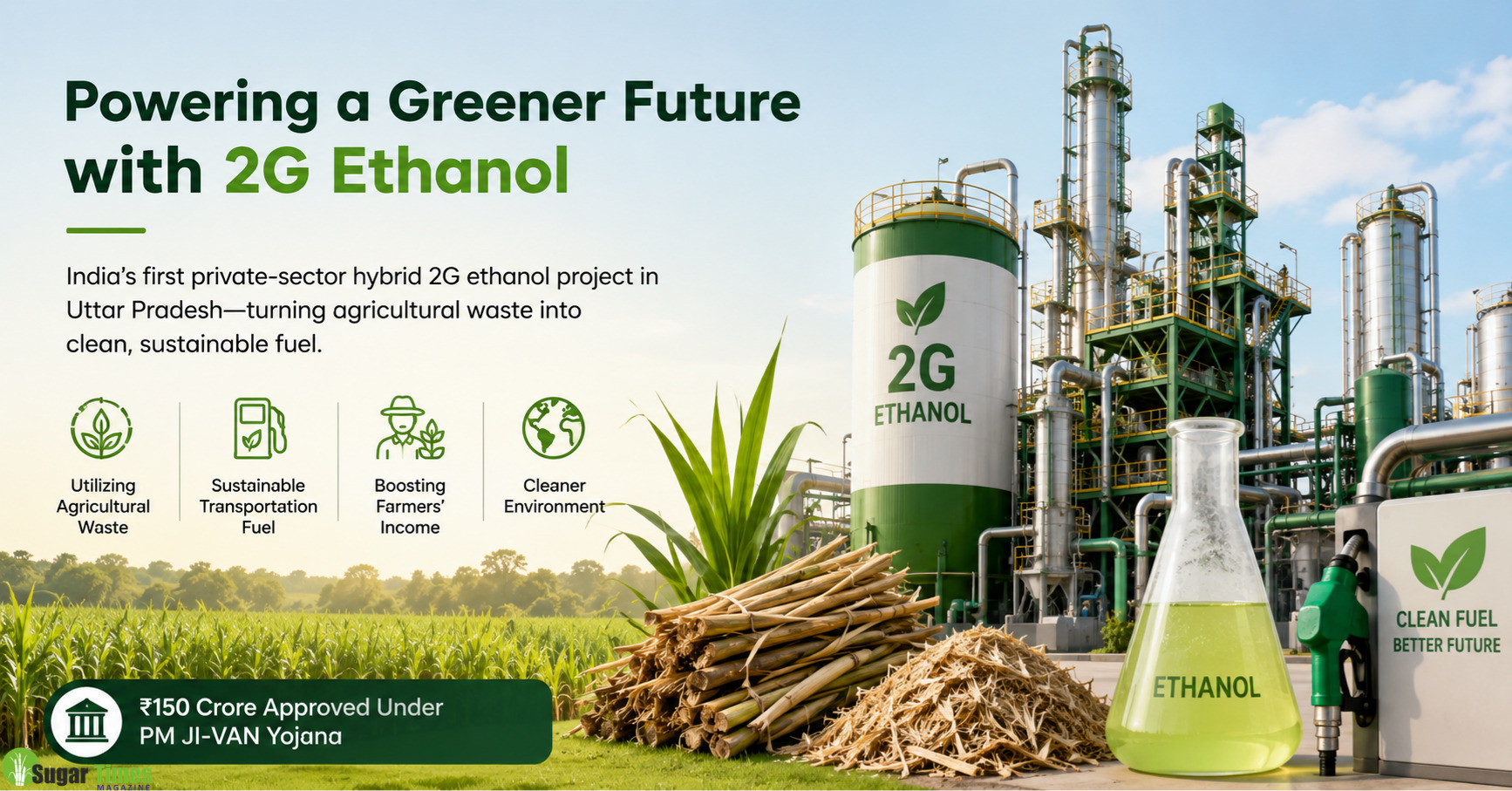
In a significant move to strengthen India's clean energy ecosystem, the Ministry of Petroleum and Natural Gas (MoPNG) has approved financial assistance of ₹150 crore for the country's first private-sector hybrid second-generation (2G) ethanol project in Uttar Pradesh. The funding has been sanctioned under the PM JI-VAN Yojana, a flagship scheme aimed at promoting advanced biofuel technologies and reducing dependence on fossil fuels.
The upcoming project marks an important milestone in India's transition toward a circular bioeconomy by converting agricultural waste into sustainable transportation fuel. The biorefinery will utilize sugarcane bagasse and other crop residues as feedstock, helping create value from biomass that is often discarded or burned in fields.
Advanced Technology to Produce Sustainable Ethanol
The project will establish a 91-kilolitre-per-day (KLPD) integrated biorefinery that combines biomass gasification and gas fermentation technologies. Agricultural residues will first be converted into synthesis gas (syngas), which will then be processed through specialized fermentation techniques to produce second-generation ethanol.
Unlike conventional ethanol production, which relies on sugarcane juice or food grains, 2G ethanol technology uses non-food agricultural waste. This approach supports India's renewable energy goals while avoiding competition with food production.
Collaboration Between Industry and Technology Leaders
The project brings together several industry players with expertise in engineering and biofuel technologies. The integrated facility is expected to demonstrate how agricultural waste can be transformed into high-value renewable fuel through a combination of thermochemical and biological processes.
Experts believe the project could serve as a model for future biofuel plants across the country, showcasing the commercial viability of advanced ethanol production technologies.
Benefits for Farmers and the Environment
The initiative is expected to create new economic opportunities for farmers by generating demand for agricultural residues that often have limited market value. It may also help reduce stubble burning and other forms of biomass waste disposal that contribute to air pollution.
By converting crop waste into fuel, the project supports multiple national objectives, including cleaner energy production, rural income generation, and lower greenhouse gas emissions.
Strengthening India's Energy Security
The approval comes as India continues to expand its ethanol blending programme and seeks alternative feedstocks to meet growing biofuel demand. Advanced biofuels produced from agricultural residues are increasingly viewed as a key component of the country's long-term strategy to reduce crude oil imports and improve energy security.
With the government's support for innovative biofuel projects, India is positioning itself to become a global leader in sustainable ethanol production while advancing its climate and renewable energy commitments.
A Step Toward a Circular Bioeconomy
The Uttar Pradesh project highlights the growing role of waste-to-energy technologies in India's green transition. By converting agricultural residues into clean transportation fuel, the initiative demonstrates how rural resources can contribute to economic growth, environmental sustainability, and energy independence.
As the country pursues higher ethanol blending targets and explores new renewable fuel pathways, projects like this are expected to play a crucial role in shaping India's future bioeconomy.