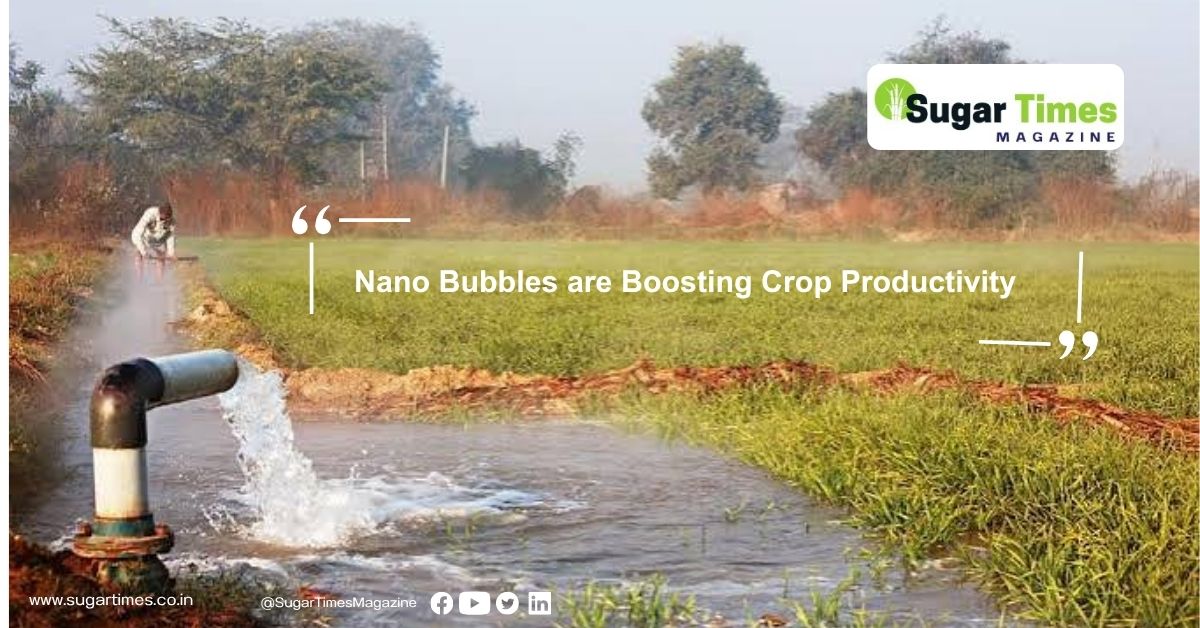
Indian agriculture today faces several serious challenges. Water scarcity, declining soil fertility, excessive use of chemical fertilizers and pesticides, and inefficient irrigation systems are increasing the cost of farming. In such circumstances, Nano Bubble Technology is emerging as a modern, sustainable, and chemical-free solution for the agricultural sector.
Experts believe that this technology not only helps increase crop productivity but also improves soil and water quality, thereby contributing significantly to environmental conservation.
Effective Technology for Improving Water Quality
Nano bubble technology helps make irrigation water cleaner and more useful. It reduces the accumulation of dirt and mineral deposits in pipelines and drip irrigation systems, enabling irrigation networks to function more efficiently. In addition, the technology decreases the presence of algae and harmful microorganisms in water.
As a result, farmers receive cleaner and higher-quality water, leading to improved irrigation efficiency and better crop performance.
Improving Soil Health
According to experts, nano bubbles increase the availability of oxygen around plant roots, promoting faster and healthier plant growth. The technology also helps retain soil moisture and enhances water absorption capacity.
Furthermore, beneficial microorganisms present in the soil become more active, increasing the availability of nutrients and ensuring balanced nutrition for plants.
Better Seed Germination and Nutrient Uptake
Nano bubbles are also considered highly effective in improving seed germination rates. Better germination leads to stronger initial plant growth, which positively impacts overall crop yield.
Oxygen-rich water enables plants to absorb nutrients more efficiently. This improves the effectiveness of fertilizers and supports balanced plant development.
Success in Disease Management
Experts report that nano bubble technology can help reduce fungal and bacterial diseases in crops. It lowers the risk of root rot and similar problems while reducing dependence on chemical pesticides.
Reduced chemical usage not only lowers farming costs but also contributes to environmental sustainability and safer agricultural practices.
A Practical Solution for Farmers
Nano bubble technology addresses several day-to-day challenges faced by farmers. By increasing dissolved oxygen levels in irrigation water, it creates a healthier environment for plant growth and enhances the efficiency of water and nutrient utilization.
As Indian agriculture moves toward sustainable and resource-efficient farming, nano bubble technology has the potential to become a valuable tool for increasing productivity, reducing costs, and protecting natural resources.
A Growing Role in the Future of Agriculture
According to Lalit Vashistha, nano bubble technology has the potential to play a significant role in making Indian agriculture more sustainable, productive, and environmentally friendly in the coming years. If adopted on a large scale, this technology could become a major driver of water conservation, soil improvement, and chemical-free farming in India.
By improving the efficiency of irrigation systems and enhancing crop health, nano bubbles can help farmers achieve higher yields while reducing their dependence on chemical inputs. As the agricultural sector increasingly focuses on sustainability, this technology is expected to emerge as an important innovation for the future.
What Are Nano Bubbles?
Nano bubbles are extremely tiny gas bubbles that are much smaller than ordinary bubbles. Their most distinctive feature is that they remain stable in water for extended periods, unlike conventional bubbles that quickly rise to the surface and burst.
These microscopic bubbles increase the amount of dissolved oxygen in water, making irrigation water more effective for agricultural use. Their positive impact can be seen in soil structure, root development, nutrient absorption, and overall crop quality.
By enhancing oxygen availability and improving water efficiency, nano bubbles create favorable conditions for healthier plant growth and better agricultural productivity. As a result, they are increasingly being recognized as a promising technology for modern and sustainable farming practices.
Important Information Before Adopting the Technology
If farmers wish to incorporate nano bubble technology into their irrigation systems, they should first assess and provide key details about their existing irrigation infrastructure. These include:
- The size and layout of the irrigation pipeline network
- Pump capacity and operating specifications
- Types of crops being cultivated
- Total irrigation area
- Irrigation methods being used, such as drip, sprinkler, or flood irrigation
According to experts, these factors are essential for designing a nano bubble system that is tailored to the specific needs of each farm. A customized setup ensures optimal performance, improved water-use efficiency, and maximum benefits for crop growth and productivity.
By carefully evaluating these parameters before installation, farmers can make informed decisions and achieve the best possible return from their investment in nano bubble technology.