
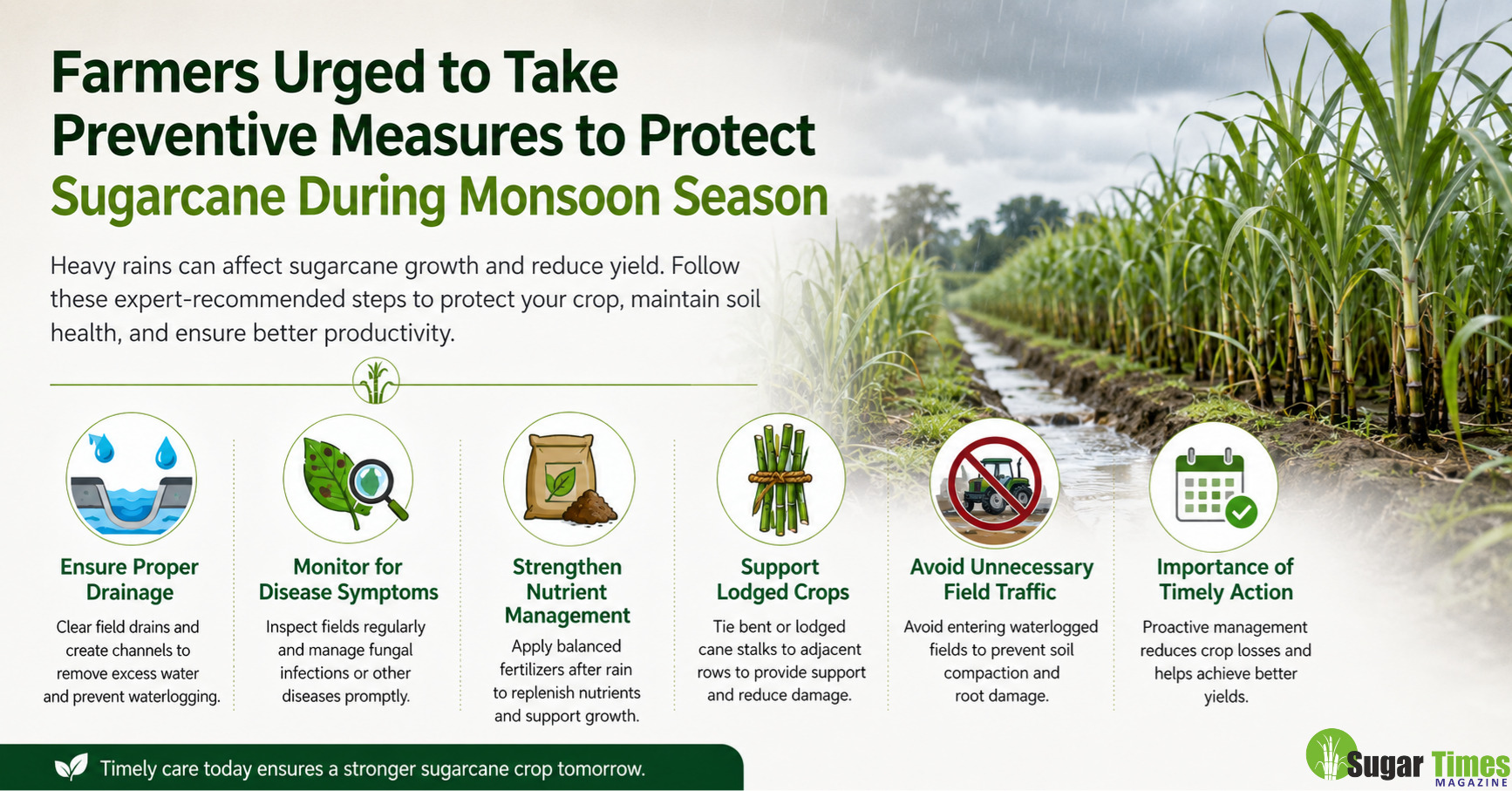
Farmers Urged to Take Preventive Measures to Protect Sugarcane During Monsoon Season
As monsoon rains intensify across several sugarcane-growing regions, agricultural experts have warned farmers about the potential risks excessive rainfall poses to standing sugarcane crops. While adequate rainfall is beneficial for crop growth, prolonged waterlogging can lead to significant yield losses and deteriorate crop health.
According to agricultural specialists, continuous rainfall often results in poor soil aeration, weakening root systems and increasing the likelihood of fungal and bacterial diseases. Waterlogged fields can also reduce nutrient uptake, affecting cane development and ultimately lowering productivity.
Major Risks of Excessive Rainfall in Sugarcane Fields
Experts highlight several challenges associated with heavy rains:
- Waterlogging around the root zone can stunt plant growth.
- Increased moisture levels create favorable conditions for red rot, wilt, and other fungal diseases.
- Nutrient leaching may reduce the availability of essential elements such as nitrogen and potassium.
- Lodging, or the bending and falling of cane stalks, becomes more common during storms and strong winds.
- Delayed field operations can affect overall crop management.
Recommended Measures to Protect Sugarcane Crop
Agricultural scientists recommend the following steps to minimize damage during periods of heavy rainfall:
Ensure Proper Drainage
Farmers should immediately clear field drains and create channels to remove excess water. Rapid drainage helps prevent root suffocation and disease outbreaks.
Monitor for Disease Symptoms
Regular field inspections are essential. Any signs of fungal infection, leaf discoloration, or stalk damage should be addressed promptly using recommended crop protection practices.
Strengthen Nutrient Management
Heavy rains can wash away nutrients from the soil. Experts advise balanced fertilizer application after rainfall events to replenish nutrient losses and support healthy crop growth.
Support Lodged Crops
Where sugarcane stalks have bent due to strong winds or rain, farmers should tie adjacent rows together to provide support and reduce further lodging.
Avoid Unnecessary Field Traffic
Entering waterlogged fields can compact the soil and damage roots. Farmers should wait until field conditions improve before carrying out cultivation activities.
Importance of Timely Action
Agricultural experts emphasize that proactive management during the monsoon season can significantly reduce crop losses. By maintaining effective drainage, monitoring disease incidence, and ensuring balanced nutrition, farmers can safeguard sugarcane yields and improve crop performance despite adverse weather conditions.
With weather patterns becoming increasingly unpredictable, adopting climate-resilient farming practices will play a crucial role in sustaining sugarcane productivity and farm income in the years ahead.