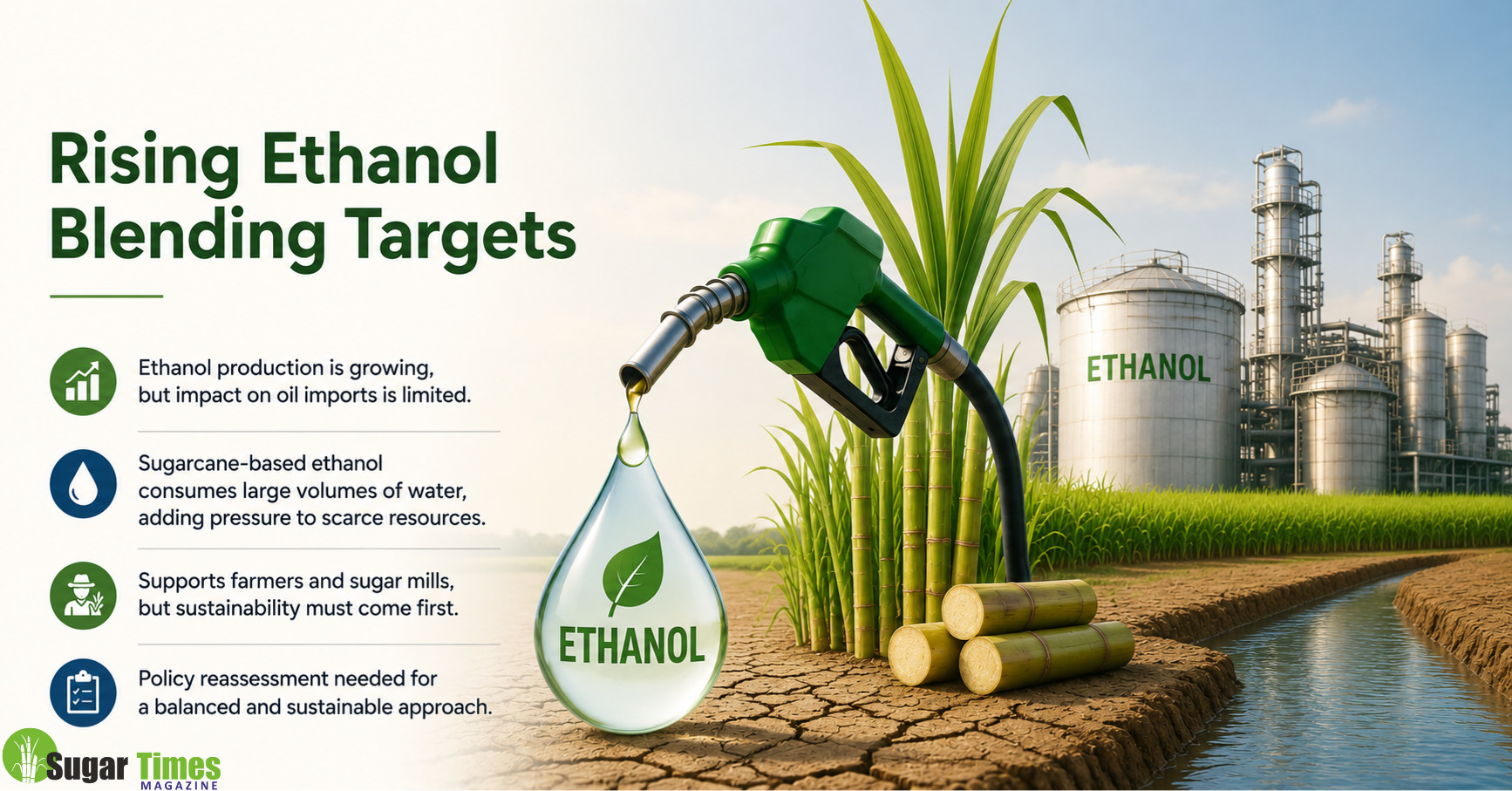
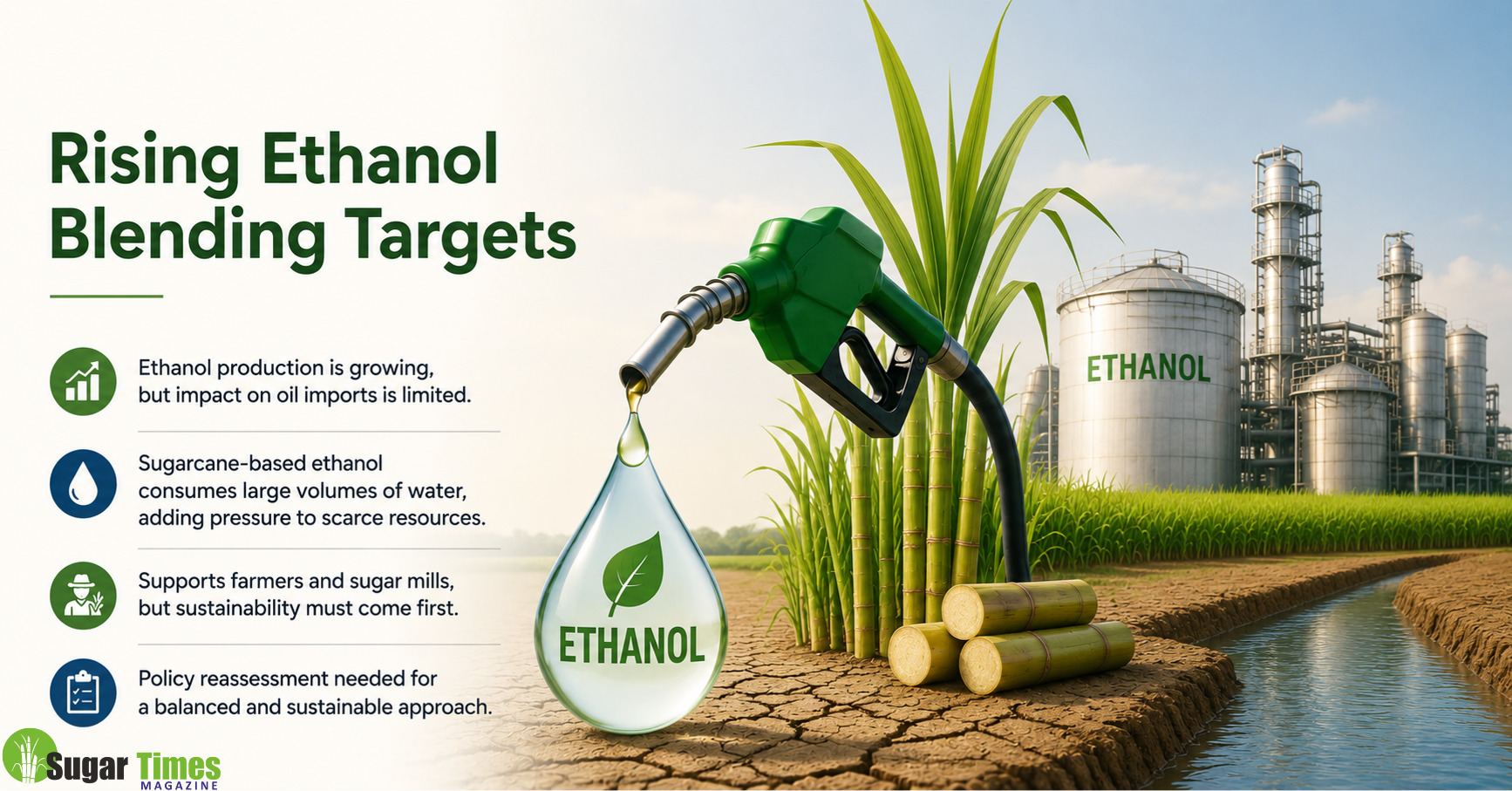
Rising Ethanol Blending Targets May Increase Water Stress Without Delivering Full Energy Security
India's ambitious ethanol blending program has been widely promoted as a solution to reduce crude oil imports, improve energy security, support farmers, and strengthen the country's foreign exchange reserves. However, as the ethanol industry expands rapidly, experts are increasingly questioning whether the long-term benefits justify the environmental and economic costs.
The government's ethanol strategy was initially driven by the goal of reducing dependence on imported crude oil. By blending ethanol with petrol, policymakers hoped to lower fuel import bills, ease pressure on the current account deficit, and create additional income opportunities for farmers, particularly sugarcane growers.
To accelerate production, the government provided significant financial support to distilleries through soft loans, interest subsidies, and capacity-expansion incentives worth thousands of crores. As a result, India's ethanol production infrastructure has grown at an unprecedented pace over the past few years.
Supply Growth Outpacing Demand
Industry observers note that the focus has gradually shifted from creating ethanol production capacity to ensuring sufficient demand for the growing output. While blending targets continue to rise, concerns are emerging that ethanol production expansion may now be driven more by the need to utilize installed capacity than by actual energy security requirements.
Critics argue that ethanol blending alone cannot significantly reduce India's dependence on imported crude oil, given the country's rapidly growing fuel consumption. Even higher blending percentages may have only a limited impact on overall oil imports.
Water Consumption Raises Sustainability Questions
One of the biggest concerns surrounding India's ethanol push is water usage. Sugarcane, which remains a major feedstock for ethanol production, is among the most water-intensive crops grown in the country.
Expanding ethanol production through increased sugarcane cultivation could place additional pressure on already stressed groundwater resources, especially in states facing recurring water shortages. Experts warn that pursuing higher ethanol blending targets without addressing water efficiency could create environmental challenges that outweigh some of the program's intended benefits.
Balancing Farmer Support and Resource Management
The ethanol program has undoubtedly created a new revenue stream for sugar mills and farmers. It has helped absorb surplus sugar production and improved liquidity across parts of the sugar industry.
However, policymakers may need to carefully evaluate whether future ethanol expansion should prioritize alternative feedstocks, water-efficient technologies, and region-specific sustainability considerations. A balanced approach could help protect farmer incomes while minimizing environmental risks.
Need for a Policy Reassessment
As India moves toward more ambitious ethanol blending goals, experts suggest that a comprehensive review of the policy's economic, environmental, and energy-security outcomes is necessary. The challenge is no longer just increasing ethanol production but ensuring that the strategy remains sustainable, efficient, and aligned with the country's long-term energy and resource-management objectives.
While ethanol will likely remain an important component of India's clean-energy transition, future policy decisions may need to focus on balancing fuel security goals with water conservation and broader environmental sustainability.