
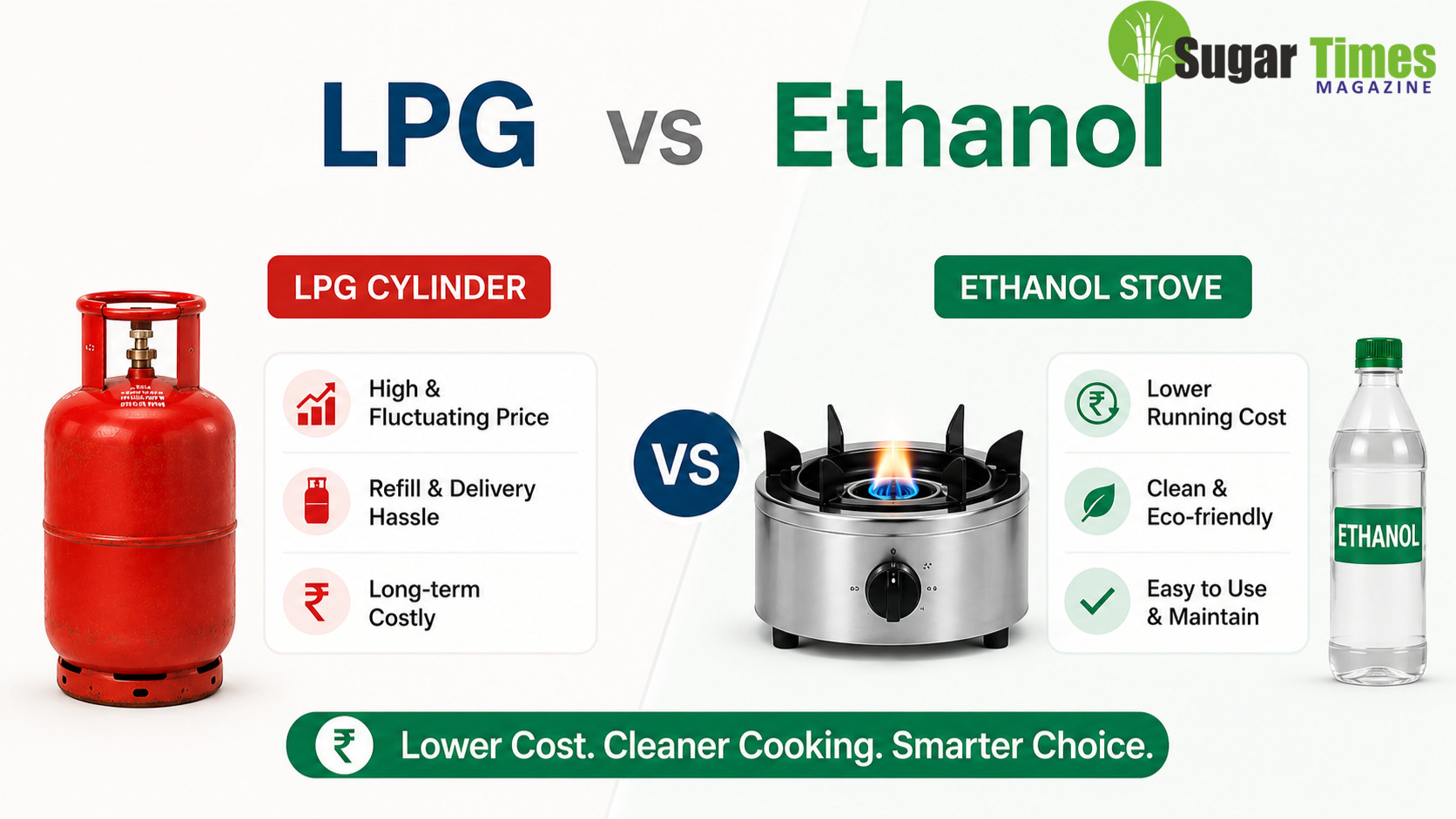
Ethanol Stove Technology Explained
Until now, ethanol has mostly been associated with fuel blending in automobiles, but the same biofuel is now emerging as a promising alternative for household cooking. Ethanol-based cooking stoves are being discussed as a cleaner, safer, and more affordable replacement for traditional LPG cylinders.
Union Minister Nitin Gadkari has also highlighted the potential of ethanol-powered cooking technology during public discussions on sustainable energy solutions. The innovation could significantly reduce household cooking expenses while also benefiting the environment and public health.
What Is an Ethanol Stove?
An ethanol stove is a modern cooking appliance that uses bio-ethanol fuel derived from crops such as sugarcane, maize, and sweet sorghum biomass. Unlike conventional fuels such as kerosene, firewood, or coal, ethanol burns cleanly and produces minimal smoke, soot, or harmful emissions.
These stoves are designed to provide a strong and stable flame similar to LPG cooking systems. Ethanol can be used in both liquid and gel form, making the technology highly flexible and safe for domestic use.
According to reports by the United Nations Climate Technology Centre and Network, ethanol stoves have the potential to improve indoor air quality and reduce dependence on fossil fuels.
Why Ethanol Stoves Are Being Seen as Better Than LPG
1. Lower Cooking Costs
One of the biggest advantages of ethanol stoves is affordability. Ethanol fuel can reduce cooking expenses compared to LPG cylinders, especially if biofuel production increases at scale.
Studies cited in international clean-energy reports suggest that advanced ethanol stoves can deliver long-duration flame efficiency with relatively low fuel consumption. Some models are reported to provide several hours of continuous cooking with just one litre of ethanol.
2. Cleaner and Healthier Cooking
Traditional cooking fuels often release smoke and pollutants that can affect indoor air quality and human health. Ethanol burns much cleaner, producing little to no smoke or soot.
This means:
•No blackened utensils
•Reduced indoor pollution
•Better respiratory health
•Cleaner kitchen environments
The technology is particularly beneficial in rural and semi-urban households where solid fuels are still commonly used.
3. Faster Heating Performance
Ethanol flames can generate temperatures ranging between 700°C and 800°C, allowing food to cook quickly and efficiently. The strong flame performance makes ethanol stoves comparable to LPG in daily household cooking applications.
4. Improved Safety
Ethanol gel fuel is considered safer in many situations because it reduces the risk of leakage and uncontrolled spread compared to pressurised LPG gas systems. Since the fuel is not stored under high pressure like LPG cylinders, the risk associated with gas explosions may also be lower.
5. Environment-Friendly Fuel
Unlike LPG, which is a fossil fuel, ethanol is produced from renewable agricultural sources such as sugarcane and corn. It is often described as a low-carbon or near carbon-neutral fuel because the crops used in its production absorb carbon dioxide during growth.
Large-scale adoption of ethanol cooking technology could:
•Reduce fossil fuel dependence
•Support agricultural economies
•Lower carbon emissions
•Reduce deforestation caused by firewood usage
Can Ethanol Replace LPG in India?
Experts believe ethanol stoves could become an important alternative cooking solution in the future, particularly in regions where biofuel production is strong. India’s growing ethanol ecosystem, supported by sugar and agricultural industries, may help accelerate adoption.
However, large-scale commercial availability, pricing, distribution infrastructure, and consumer awareness will play a crucial role in determining how quickly ethanol cooking technology becomes mainstream.
The Future of Clean Cooking
As countries focus on cleaner energy and sustainable living, ethanol-based cooking systems are gaining attention worldwide. With benefits including lower emissions, reduced cooking costs, and improved safety, ethanol stoves could emerge as a major innovation in the next generation of household cooking technology.
The shift may not completely replace LPG overnight, but ethanol-powered stoves could become an important part of India’s clean energy transition in the years ahead.