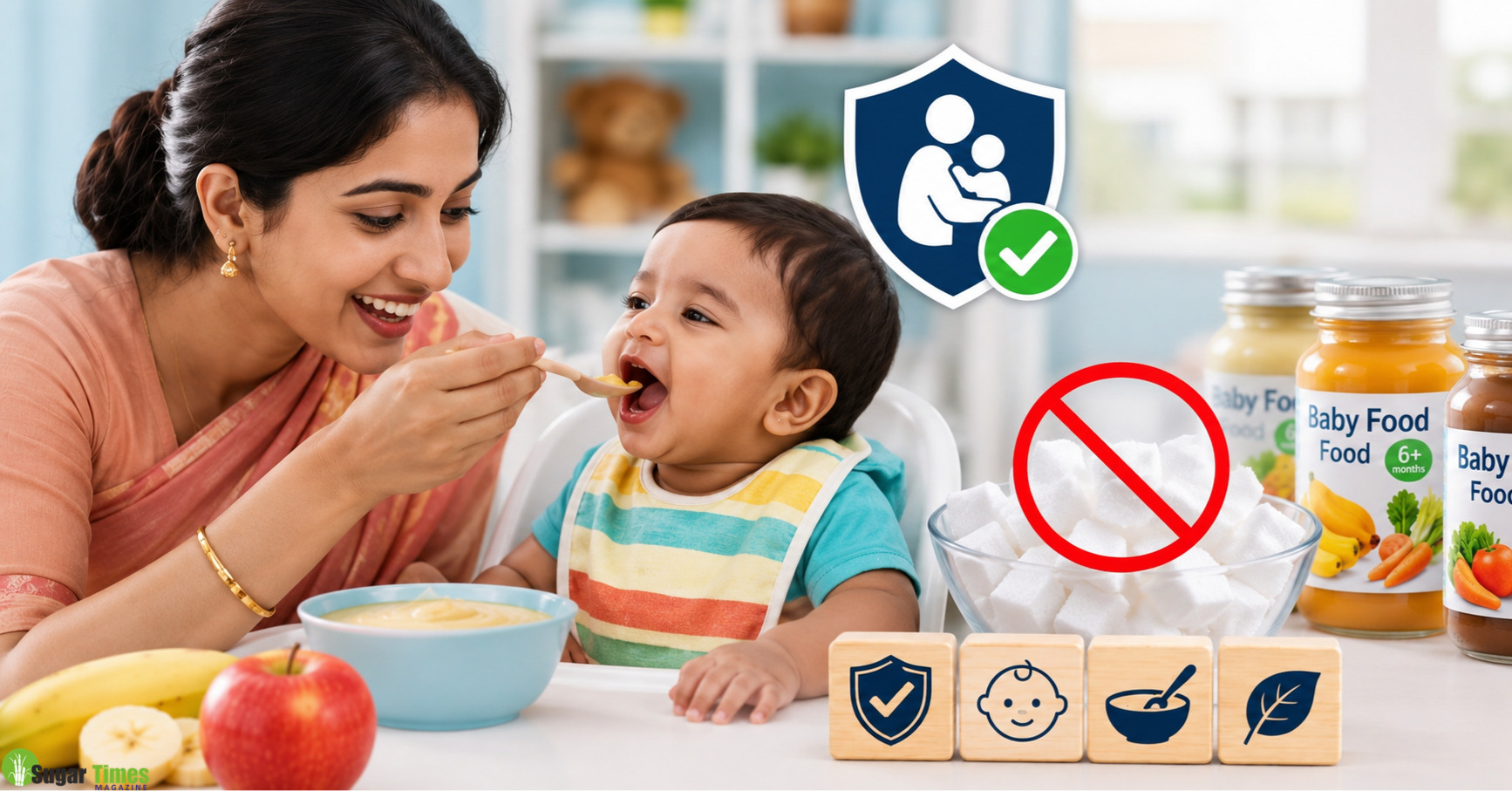
New Delhi: A Parliamentary Standing Committee has recommended that the Government of India introduce stricter regulations on the amount of sugar allowed in baby food and food products meant for young children. The panel has also proposed mandatory annual inspections and product sampling to ensure that infants receive safe and nutritious food.
The recommendations are part of the committee's report titled "Regulation of Sugar Content in Baby Food and Other Packaged Food Products," recently presented in Parliament.
Panel Calls for Strict Sugar Standards in Infant Food
The Standing Committee on Consumer Affairs, Food and Public Distribution said that packaged baby foods containing excessive sugar could have long-term health consequences for infants and toddlers. Referring to recommendations from the Indian Council of Medical Research (ICMR) and the World Health Organization (WHO), the committee warned that high sugar intake during early childhood may increase the risk of:
- Tooth decay
- Childhood obesity
- Metabolic disorders
- Other lifestyle-related health complications
The committee emphasized that protecting children's nutritional health should remain a key responsibility of the government.
Government Asked to Set Sugar Limits
The panel recommended that the government establish clear limits on sugar content in:
- Infant formula
- Cereal-based complementary foods
- Traditional packaged baby foods
It also encouraged food manufacturers to develop products containing little or no added sugar while maintaining nutritional quality and safety.
Front-of-Pack Sugar Disclosure Proposed
To improve transparency, the committee suggested that any baby food containing added sugar should clearly mention it on the front of the package.
The label should prominently display:
- Added sugar content per serving (in grams)
- Percentage contribution to a child's recommended daily energy intake
This would help parents make more informed choices while purchasing baby food products.
Global Practices on Sugar in Baby Food
The report highlighted international approaches to regulating sugar in infant nutrition:
- WHO: Recommends that complementary foods for children aged 6 months to 2 years should contain no added sugar.
- United States: Foods and beverages intended for children under 24 months should not contain added sugar.
- Europe and the United Kingdom: Baby food manufacturers generally do not use refined sugar in products sold in these markets.
- India: Under current FSSAI regulations, sucrose or fructose may be added to infant food only when required as a source of carbohydrates.
Colour-Coded Sugar Warning Labels Suggested
The committee has also proposed a simple colour-coded front-of-pack labelling system for all packaged food products to help consumers quickly identify sugar levels.
- Red: High sugar content
- Yellow: Moderate sugar content
- Green: Low or safe sugar content
Products with high sugar levels should also carry a clear health warning, the committee said.
Focus on Child Nutrition and Consumer Awareness
The recommendations aim to strengthen food safety standards, improve nutritional transparency and reduce excessive sugar consumption among infants and young children. If implemented, the proposed measures could significantly improve consumer awareness and encourage manufacturers to reformulate baby food products with healthier ingredients.