
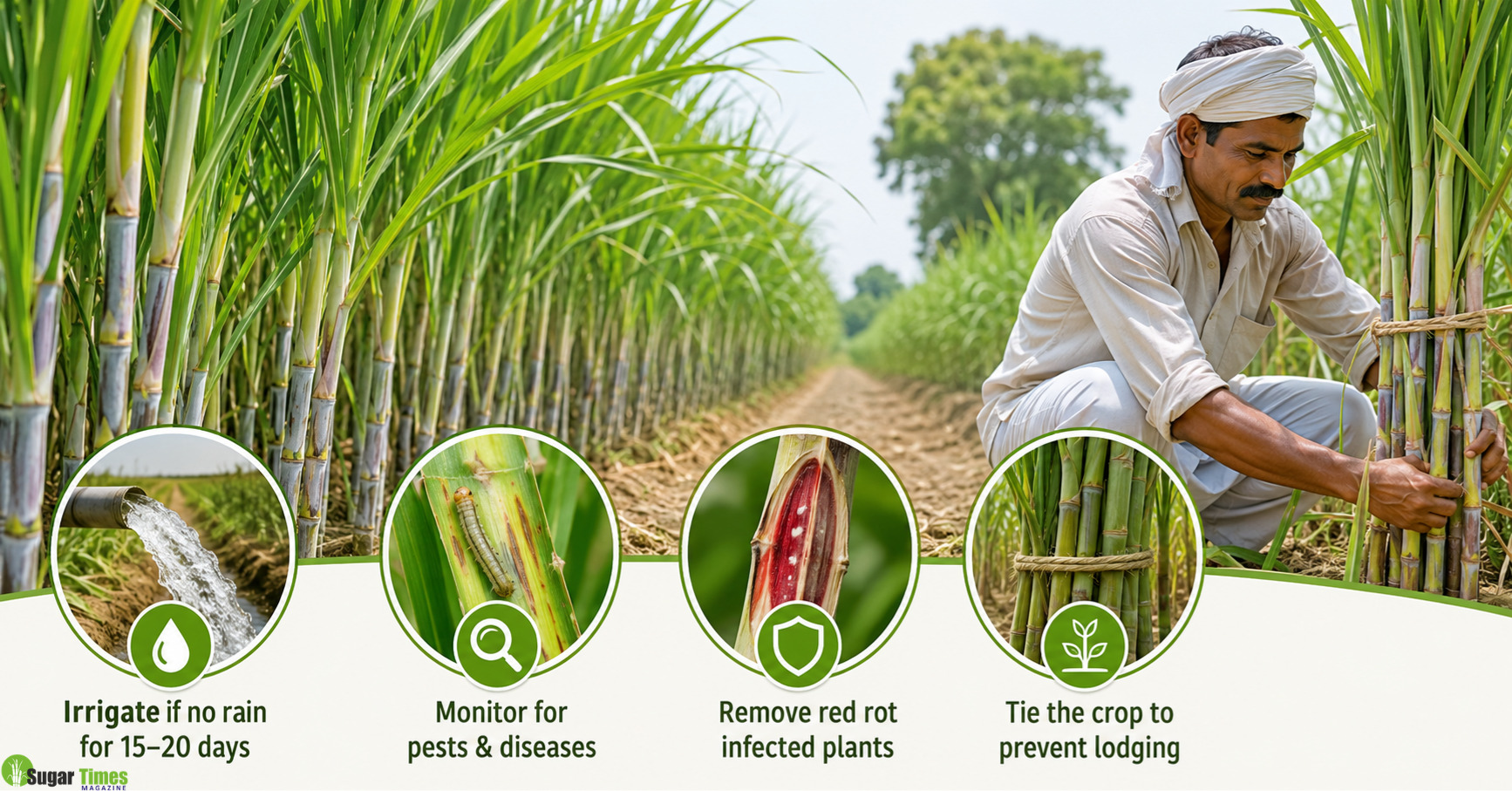
The period from July to September is considered the most critical stage in sugarcane cultivation. Agricultural experts describe this as the "Grand Growth Phase," during which nearly 80% of the crop's total growth takes place. Proper crop management during these three months can significantly improve yield and protect the crop from diseases, pests, lodging, and moisture stress.
Experts from the Uttar Pradesh Sugarcane Research Institute have advised farmers to focus on timely irrigation, disease monitoring, pest management, and crop tying to ensure healthy cane development and higher productivity.
Why July to September Is Crucial for Sugarcane
According to agricultural experts, sugarcane experiences its fastest vegetative growth during the Grand Growth Phase. Under favourable conditions, the crop grows around 4.9 to 5 inches per week, completing almost 80% of its total height during this period.
Any stress caused by water shortage, disease, pests, or strong winds can directly reduce cane weight, sugar recovery, and overall production.
1. Irrigate the Crop if Rainfall Stops for 15–20 Days
Although the monsoon season generally provides sufficient moisture, prolonged dry spells can slow crop growth.
Experts recommend that farmers should:
Irrigate sugarcane fields if there is no rainfall for 15–20 consecutive days.
Maintain adequate soil moisture during the Grand Growth Phase.
Avoid waterlogging, as excessive standing water can also increase disease incidence.
Timely irrigation helps sustain rapid cane elongation and improves final yield.
2. Monitor Fields Regularly for Pokkah Boeng Disease and Insect Attack
The humid monsoon weather creates favourable conditions for several sugarcane diseases and insect pests.
Farmers should inspect their fields regularly for:
Pokkah Boeng disease
Stem borers and other insect pests
Leaf damage or unusual discoloration
If symptoms appear, consult local agricultural experts and use only the recommended plant protection measures. Early intervention prevents large-scale crop losses.
3. Identify and Remove Red Rot-Infected Plants Immediately
Red Rot, one of the most destructive diseases in sugarcane, often becomes visible during the monsoon season.
Common symptoms include:
Drying of top leaves
Internal stalk showing red tissue with white patches when split open
Poor plant vigour
If infected plants are found:
Uproot the entire affected clump.
Destroy the infected material away from the field.
Apply 10–20 grams of bleaching powder to the pit.
Cover the area with soil to prevent disease spread through irrigation or rainwater.
Prompt action helps protect neighbouring healthy plants.
4. Tie Sugarcane to Prevent Lodging During Heavy Winds
Heavy rainfall and strong monsoon winds often cause sugarcane plants to bend or fall over, a condition known as lodging. Lodged crops suffer from lower productivity and become difficult to harvest.
Farmers growing autumn-planted sugarcane should carry out the first crop tying (bandhai) at the appropriate stage.
Proper tying:
✓ Keeps plants upright
✓ Reduces lodging losses
✓ Improves sunlight penetration and crop management
✓ Helps maintain cane quality and yield
Key Tips for Better Sugarcane Yield
✓ Ensure irrigation if rainfall is absent for 15–20 days.
✓ Inspect fields frequently for pests and diseases.
✓ Remove Red Rot-infected plants immediately and disinfect the area with bleaching powder.
✓ Complete the first sugarcane tying before strong monsoon winds damage the crop.
✓ Follow expert recommendations for disease and pest management throughout the season.
The July–September Grand Growth Phase determines the final productivity of a sugarcane crop. Careful attention to irrigation, disease control, pest monitoring, and timely crop tying can protect the crop from major losses and significantly improve both cane yield and sugar recovery. By adopting these recommended practices, farmers can maximise production and ensure a healthier, more profitable harvest.