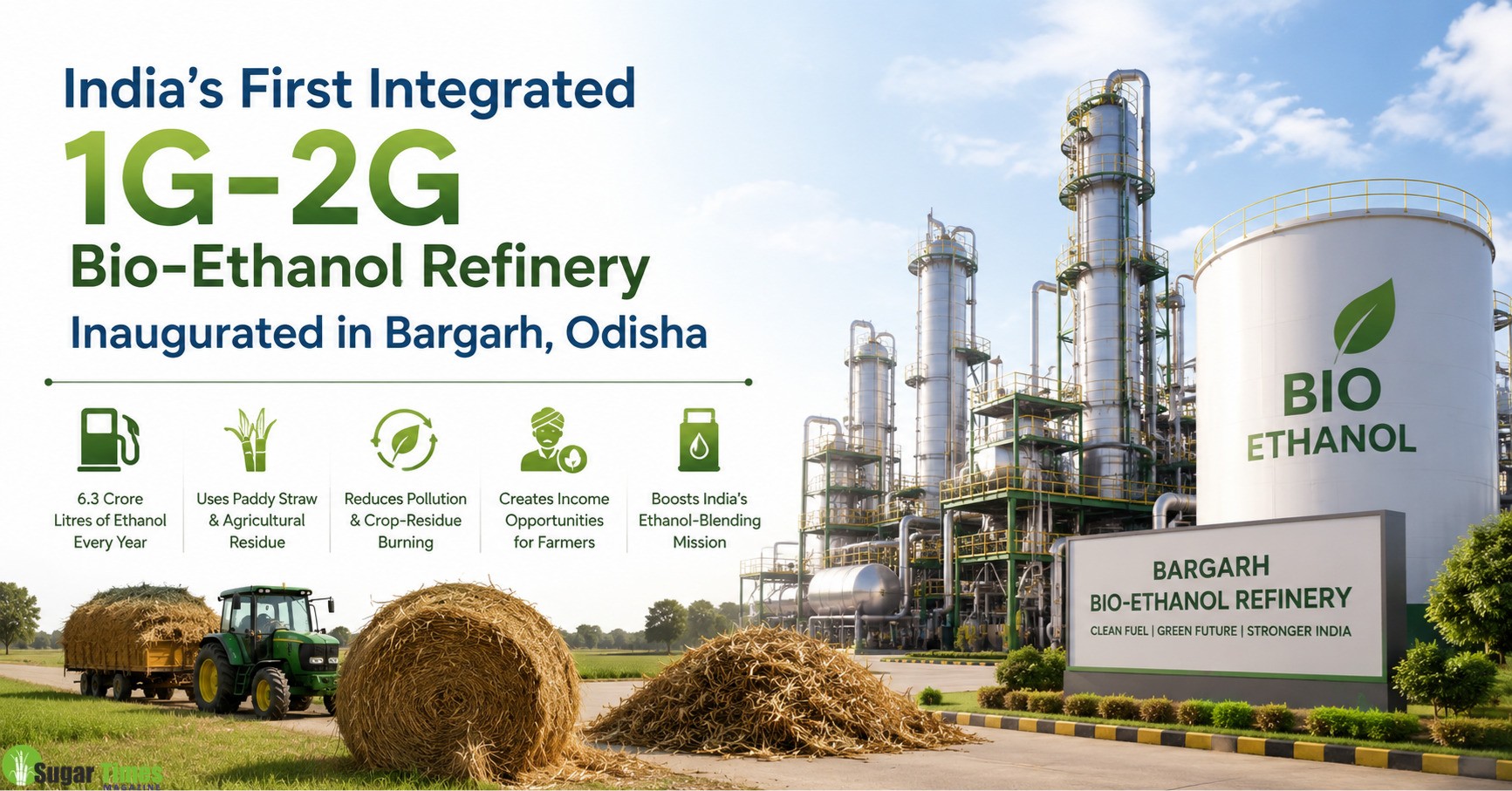
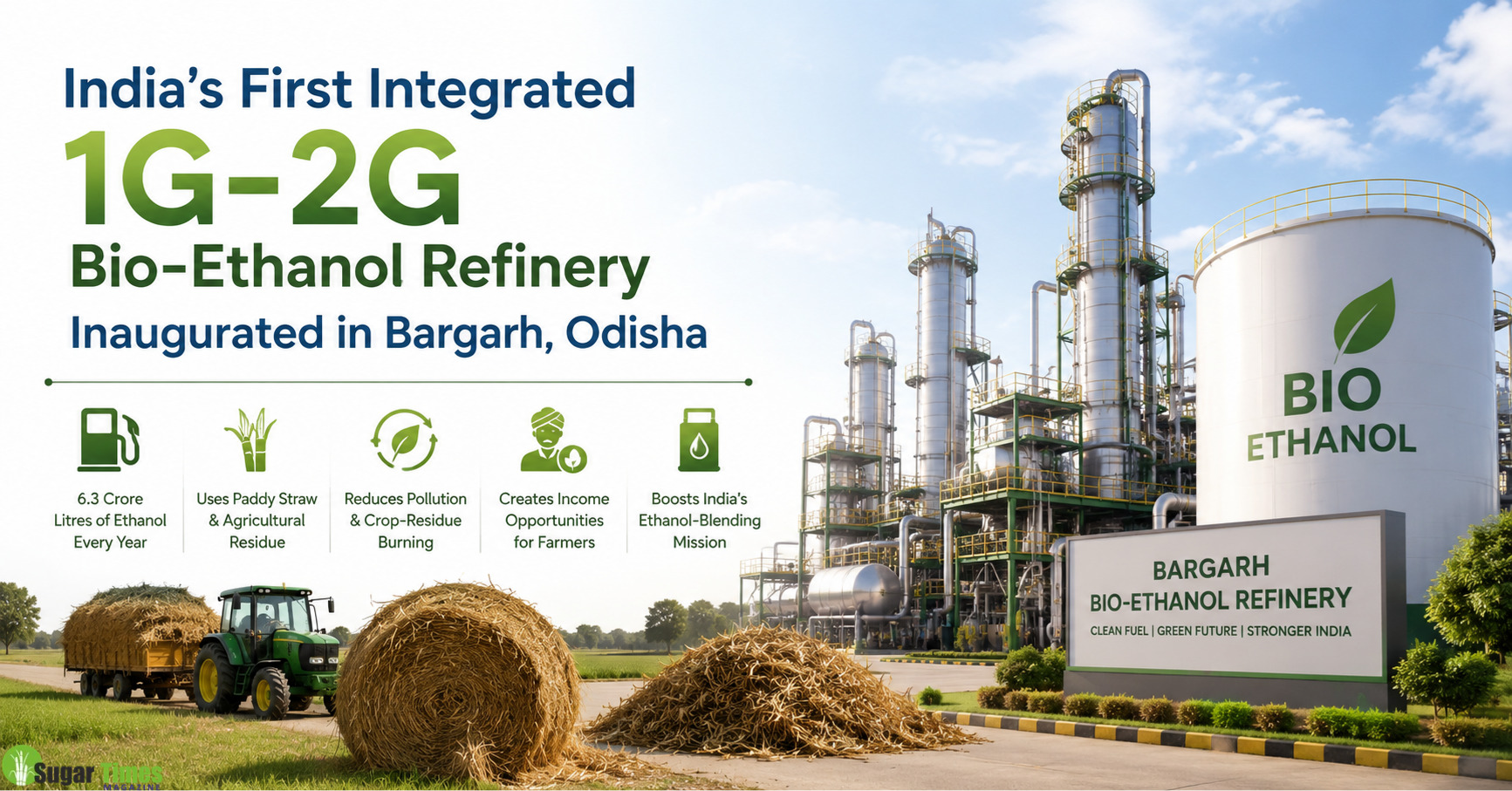
Bhubaneswar: India is set to take a major step towards cleaner fuel production with the inauguration of the country’s first integrated first-generation (1G) and second-generation (2G) bio-ethanol refinery in Odisha’s Bargarh district on July 4.
The ₹1,775-crore facility has been developed by Bharat Petroleum Corporation Limited (BPCL) under the Pradhan Mantri JI-VAN Yojana. Union Home Minister Amit Shah is expected to inaugurate the project.
The refinery is designed to produce around 6.3 crore litres of ethanol every year. It is expected to strengthen India’s ethanol-blending programme, reduce dependence on fossil fuels and create new income opportunities for farmers by turning crop residue into fuel.
First Commercial Integrated 1G-2G Ethanol Facility in India
The Bargarh refinery is being described as India’s first commercial integrated bio-ethanol plant that combines 1G and 2G ethanol production technologies at one location.
First-generation ethanol is generally made from agricultural feedstock such as sugarcane, grains and other starch-rich materials. Second-generation ethanol, on the other hand, is produced using agricultural waste and lignocellulosic biomass, including paddy straw.
The Odisha project will use paddy straw and other farm residues as raw material for producing 2G ethanol. This approach is expected to help address the problem of crop-residue burning while also creating value from materials that are often discarded after harvesting.
Turning Paddy Straw Into Clean Fuel
Odisha has a large agricultural base, and paddy cultivation generates substantial quantities of straw and biomass residue every year. The refinery is expected to collect and process this residue, converting it into renewable fuel for use in India’s transport sector.
The project could provide farmers with an additional source of earnings by creating demand for agricultural waste. Instead of burning crop residue or leaving it unused, farmers may be able to sell it for ethanol production.
The facility is also expected to support local employment through biomass collection, transportation, storage and processing activities.
Boost for India’s Biofuel and Ethanol-Blending Mission
The integrated refinery aligns with the government’s broader goal of increasing ethanol use in petrol and reducing crude oil imports. Ethanol blending is considered an important part of India’s clean-energy transition because it can lower greenhouse-gas emissions and reduce the use of conventional fossil fuels.
By producing ethanol from crop residue, the Bargarh plant will support a more sustainable fuel ecosystem. It is also expected to demonstrate how advanced biofuel technology can be used at a commercial scale in India.
The commissioning of the project is likely to encourage similar 2G ethanol investments in other agricultural states, particularly regions with high availability of paddy straw, sugarcane waste and other biomass resources.
Why the Bargarh Bio-Ethanol Refinery Matters
The Odisha refinery is significant for several reasons:
- It is India’s first integrated 1G and 2G bio-ethanol refinery.
- It will produce an estimated 6.3 crore litres of ethanol annually.
- It uses paddy straw and agricultural residue to make renewable fuel.
- It can create an additional revenue stream for farmers.
- It supports efforts to reduce crop-residue burning and air pollution.
- It strengthens India’s clean-energy and ethanol-blending targets.
With the launch of the Bargarh refinery, India moves closer to building a circular bioeconomy where farm waste can be transformed into cleaner energy, rural income and industrial growth.