ICAR Introduces a New Farm-to-Fuel Strategy
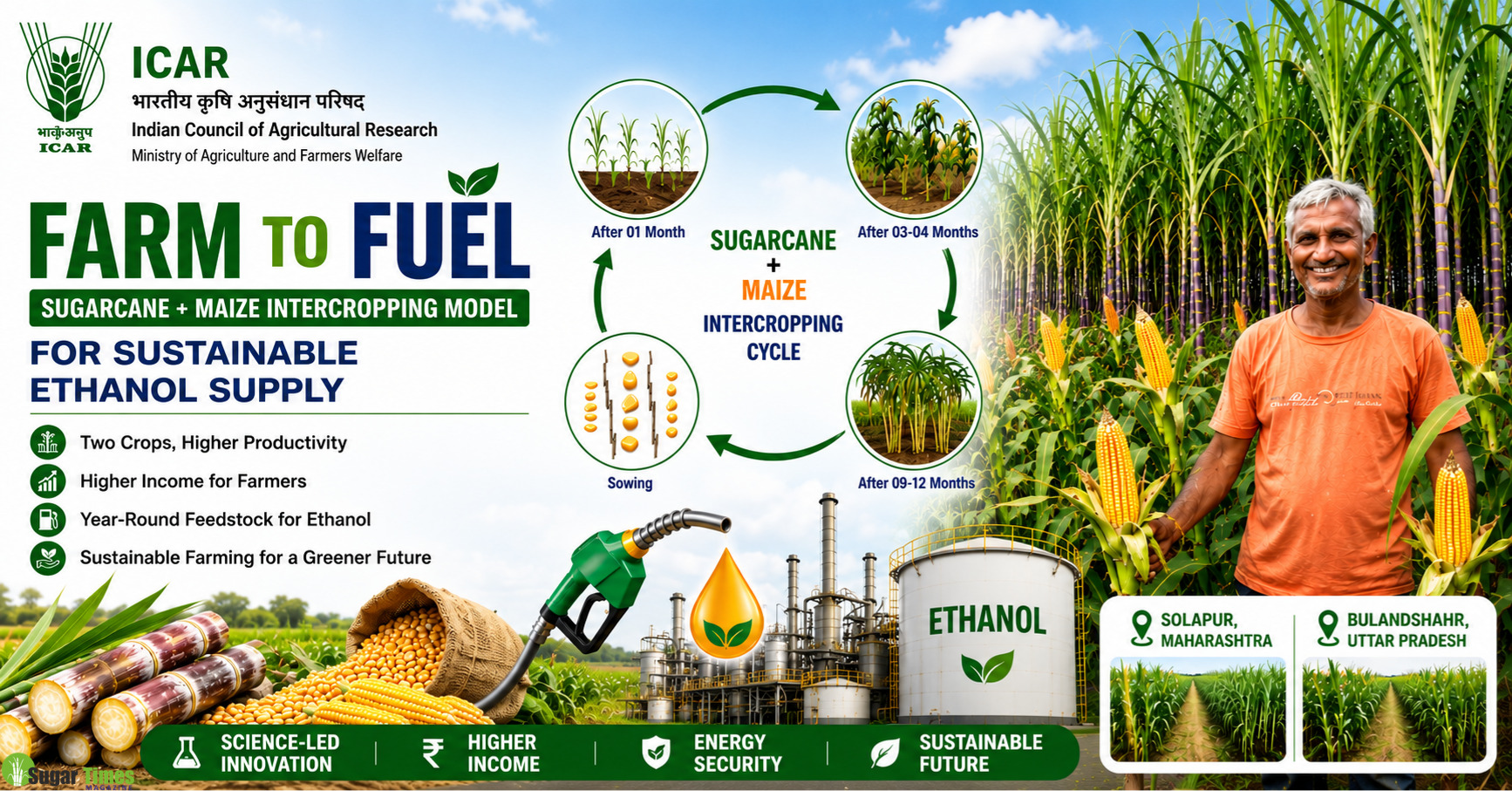
India's push towards cleaner energy and higher ethanol blending has received a major boost with an innovative farming model developed by the Indian Council of Agricultural Research (ICAR). The Sugarcane–Maize (SM) intercropping system enables farmers to cultivate maize alongside sugarcane, improving land productivity while creating a steady supply of raw material for ethanol production.
Developed by the ICAR–Indian Institute of Maize Research (IIMR), Ludhiana, the technology aims to benefit both farmers and the biofuel industry by generating additional income and ensuring continuous feedstock availability for dual-feed ethanol distilleries.
Why the New Model is Needed
Sugarcane remains one of India's most important commercial crops, covering nearly 5.4 million hectares across states such as Uttar Pradesh, Maharashtra, Karnataka and Tamil Nadu. However, sugarcane is harvested only after 10 to 15 months, leaving farmers without regular cash flow during the crop cycle.
In addition, sugar mills generally operate for only three to five months each year, limiting ethanol production despite sugarcane contributing around one-third of India's ethanol feedstock.
The new intercropping model addresses both challenges by allowing farmers to harvest maize within about 100 days while the sugarcane crop continues to grow.
How Sugarcane and Maize are Grown Together
Scientists designed the system by utilizing the early growth period of sugarcane, when sufficient space and sunlight are available between crop rows. Short-duration maize hybrids are planted during this period without significantly affecting sugarcane growth.
The model requires only minor changes in crop management, including maintaining an optimum maize plant population, applying an additional dose of nitrogen fertilizer where required, and detopping maize at the brown husk stage. This practice improves sunlight penetration for sugarcane while also producing nutritious green fodder for livestock.
Because both crops share irrigation, fertilizers and several field operations, farmers can produce two crops using nearly the same resources.
Pilot Projects Delivered Encouraging Results
Field demonstrations conducted in Solapur, Maharashtra, and Bulandshahr, Uttar Pradesh, have shown impressive outcomes.
According to ICAR, farmers adopting the Sugarcane–Maize system achieved:
- Around 28% higher sugarcane equivalent yield
- 3.5 to 5 tonnes of additional maize per hectare
- Extra net income of ₹50,000 to ₹1,00,000 per hectare
- Nearly 75% lower maize cultivation cost compared to standalone maize cultivation
The model also improved overall resource efficiency while reducing production risks.
Major Benefits for India’s Ethanol Programme
The intercropping system offers significant advantages beyond farm income. A continuous supply of maize can help ethanol plants operate for longer periods, reducing dependence on seasonal sugarcane availability.
Experts estimate that if the technology is adopted on nearly half of India's sugarcane area, it could generate 40–60 lakh tonnes of additional maize annually, creating a reliable feedstock base for approximately 500 sugarcane-based ethanol distilleries.
This would strengthen India's ethanol blending programme while improving energy security and reducing pressure on conventional fuel imports.
A Sustainable Future for Farmers
The Sugarcane–Maize intercropping model demonstrates how scientific innovation can improve agricultural profitability without requiring additional farmland. Farmers benefit from faster cash flow, diversified income, lower production risks and better resource utilization.
As India expands its biofuel ecosystem, such integrated farming systems are expected to play a vital role in supporting sustainable agriculture, increasing rural incomes and ensuring a reliable supply of feedstock for the country's growing ethanol industry.