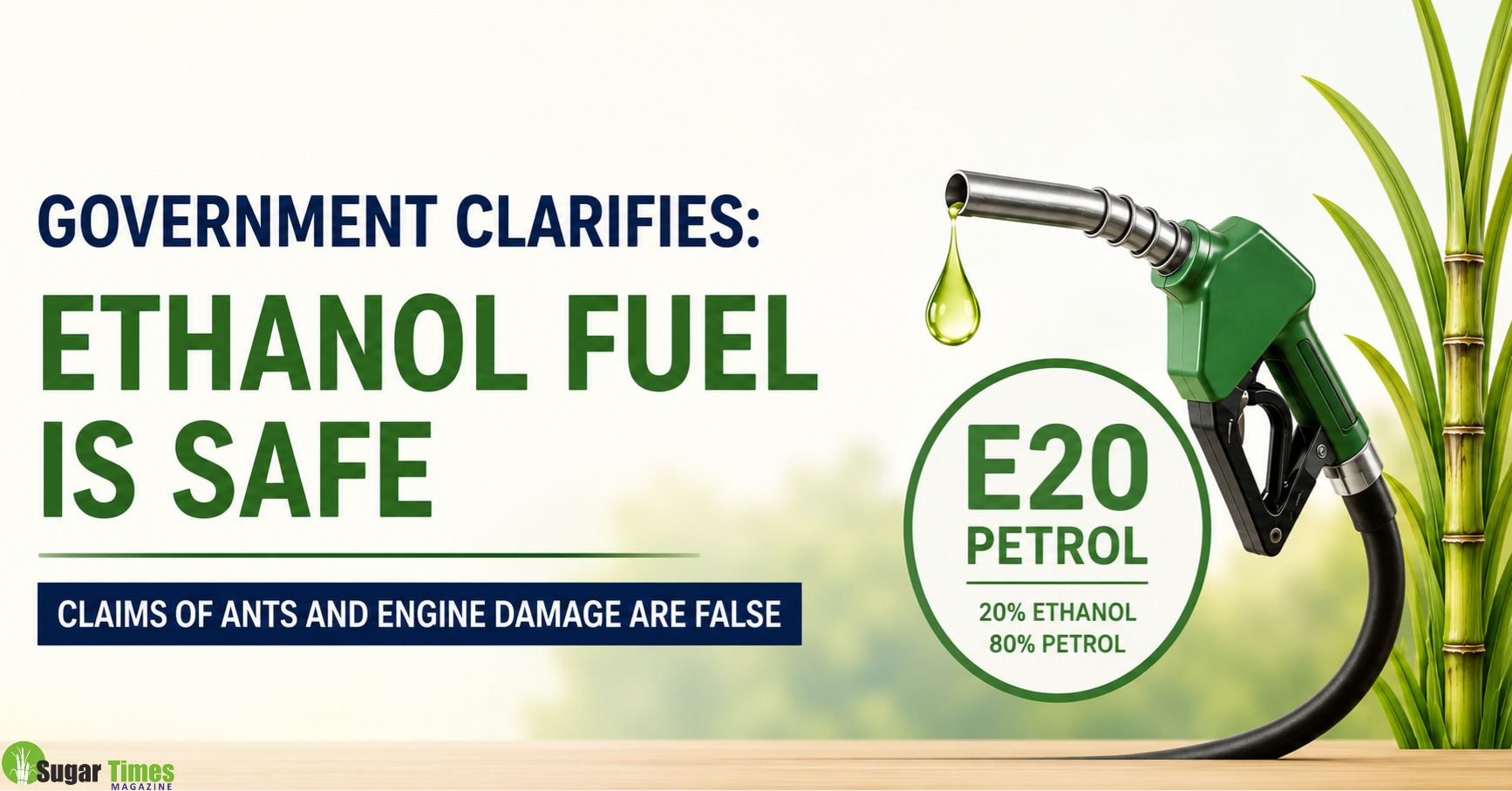
The Ministry of Petroleum and Natural Gas has dismissed several viral social media claims about ethanol-blended fuel, clarifying that E20 petrol is scientifically tested, safe for approved vehicles, and has not caused engine failures or attracted ants due to sugar content.
Government Rejects Viral Claims About Ethanol Fuel
The Government of India has issued a clarification after misleading videos and posts about ethanol-blended petrol spread across social media. During a recent press briefing, the Ministry of Petroleum and Natural Gas stated that ethanol blending is based on established scientific standards and is continuously monitored to ensure fuel quality and vehicle safety.
One widely shared video claimed that ants gather around vehicle fuel tanks because ethanol contains sugar. The ministry described this claim as completely false and urged people not to rely on outdated or misleading social media content.
Myth 1: Ants Are Attracted to Ethanol Fuel
According to the government, fuel-grade ethanol used in petrol contains no sugar. During the production process, all sugar is converted into alcohol through fermentation. In addition, denaturants are added to fuel ethanol, making it unsuitable for consumption and less attractive to insects.
Officials also stated that there is no scientific evidence linking E20 petrol with ants gathering around fuel tanks.
Myth 2: Sugarcane Juice Is Directly Mixed Into Petrol
Another viral claim suggested that raw sugarcane juice is being mixed directly into petrol.
The ministry clarified that this is entirely incorrect. Ethanol is produced through industrial fermentation and purification processes using approved feedstocks such as sugarcane juice, molasses, maize, damaged food grains, and other agricultural materials. Before blending with petrol, ethanol undergoes strict quality testing to meet national fuel standards.
Myth 3: E20 Petrol Damages Vehicle Engines
The government also rejected claims that E20 petrol causes engine failures.
According to the ministry, no verified reports have been received indicating that E20 fuel has damaged engines or caused vehicles to break down when used in compatible vehicles. E20 petrol meets prescribed quality standards and is considered safe for vehicles approved by manufacturers.
E20 Fuel Does Not Affect Vehicle Insurance
The government further clarified that using E20 petrol does not invalidate vehicle insurance. Concerns circulating on social media about insurance becoming void due to ethanol-blended fuel are baseless. Discussions with relevant stakeholders confirmed that insurance coverage remains unaffected when fuel is used according to manufacturer recommendations.
Ethanol Blending Already Used Worldwide
India is not the only country promoting ethanol-blended fuel. Several countries, including Brazil, the United States, and Japan, have successfully adopted ethanol blending programs.
Brazil has been using E27 fuel, containing 27% ethanol, for many years, demonstrating the long-term viability of ethanol-blended petrol.
Benefits of Ethanol Blending
The government highlighted several advantages of expanding ethanol use:
- Reduced crude oil imports: India has reportedly saved more than ₹1.4 lakh crore in foreign exchange through reduced dependence on imported crude oil.
- Higher farmer incomes: Increased demand for crops used in ethanol production has created additional income opportunities for farmers and strengthened the rural economy.
- Cleaner environment: Ethanol blending helps reduce carbon emissions while improving India's energy security by lowering reliance on fossil fuels.
What Is Ethanol?
Ethanol is a renewable alcohol-based biofuel produced by fermenting sugar- and starch-rich agricultural materials. It is blended with petrol to reduce emissions and decrease dependence on imported petroleum.
Common feedstocks include:
- Sugarcane juice
- Molasses
- Maize (corn)
- Damaged grains
- Sweet sorghum
- Potatoes
- Cassava
- Agricultural biomass
Types of Ethanol Production
First-Generation (1G) Ethanol
First-generation ethanol is produced from food-based crops and sugar-rich materials such as:
- Sugarcane juice
- Sugar beet
- Sweet sorghum
- Maize
- Potatoes
Second-Generation (2G) Ethanol
Second-generation ethanol is made from agricultural residues and lignocellulosic biomass, including:
- Rice straw
- Wheat straw
- Corn cobs
- Bamboo
- Woody biomass
Third-Generation Biofuel
Third-generation biofuels are expected to be produced from algae. Research and commercial development are currently underway.
India Introduces E85 Fuel
India recently launched E85 fuel for flex-fuel vehicles. The fuel contains 85% ethanol and 15% petrol and is priced significantly lower than regular petrol in several markets.
The launch reflects the government's broader push toward renewable fuels and cleaner transportation.
Flex-Fuel Options Available in India
India now offers multiple ethanol-blended fuel options:
- E5: 5% ethanol, 95% petrol
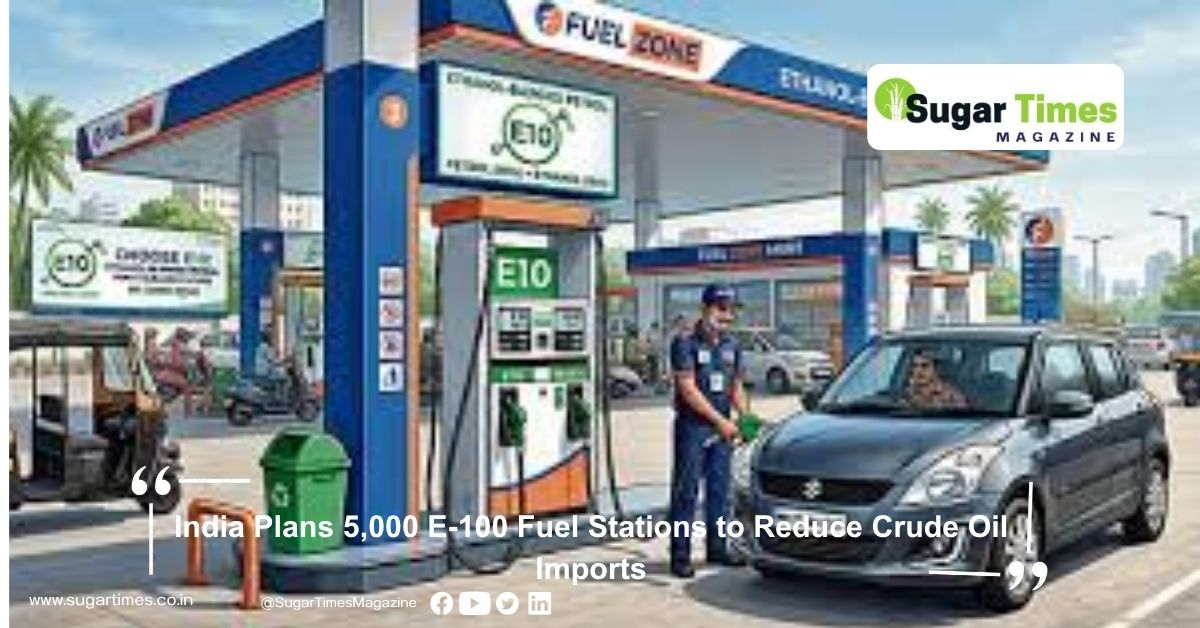
- E10: 10% ethanol, 90% petrol
- E20: 20% ethanol, 80% petrol
- E85: 85% ethanol, 15% petrol
Which Vehicles Can Use E85?
E85 fuel can only be used in specially designed flex-fuel vehicles. Standard petrol vehicles are not compatible with high-ethanol blends.
Some announced or compatible flex-fuel models include:
- Maruti Suzuki WagonR Flex Fuel, developed to operate on blends up to E100.
- Hero Splendor+ Flex Fuel and Hero HF Deluxe Flex Fuel, capable of running on E20 to E85, with phased availability beginning in 2026.
- Suzuki Gixxer SF Flex Fuel, designed to support high-ethanol fuel blends.
Conclusion
The government has reiterated that the viral claims linking ethanol fuel with ants, direct sugarcane juice mixing, engine damage, or insurance issues are false and unsupported by scientific evidence. Officials advise consumers to rely on verified information and use ethanol-blended fuels only in vehicles approved by their manufacturers. As India expands its biofuel program, ethanol blending is expected to play a key role in reducing fuel imports, supporting farmers, and promoting cleaner transportation.