




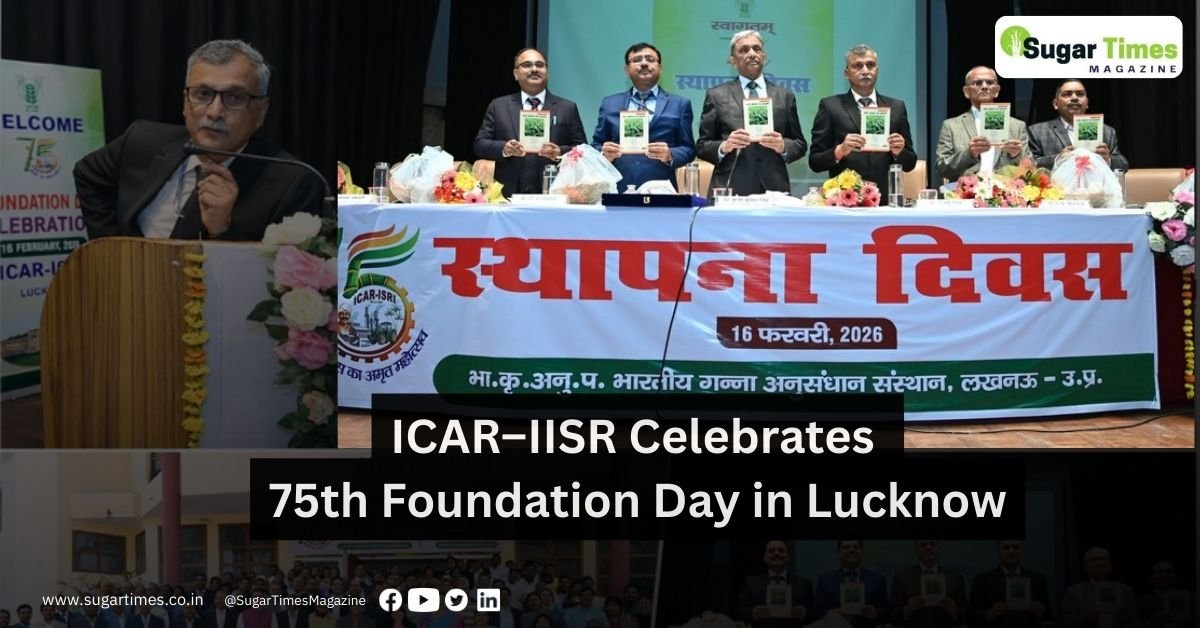
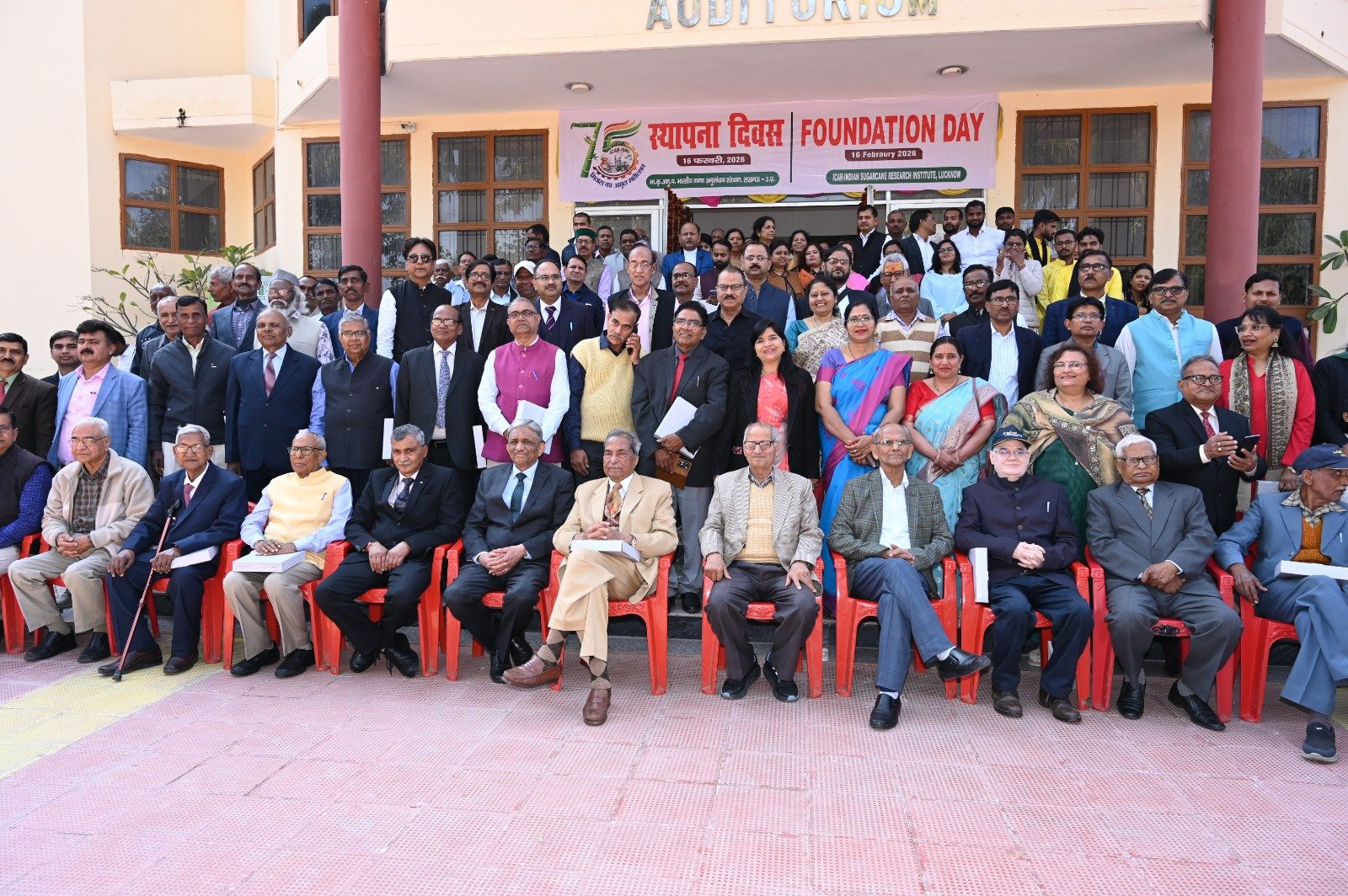
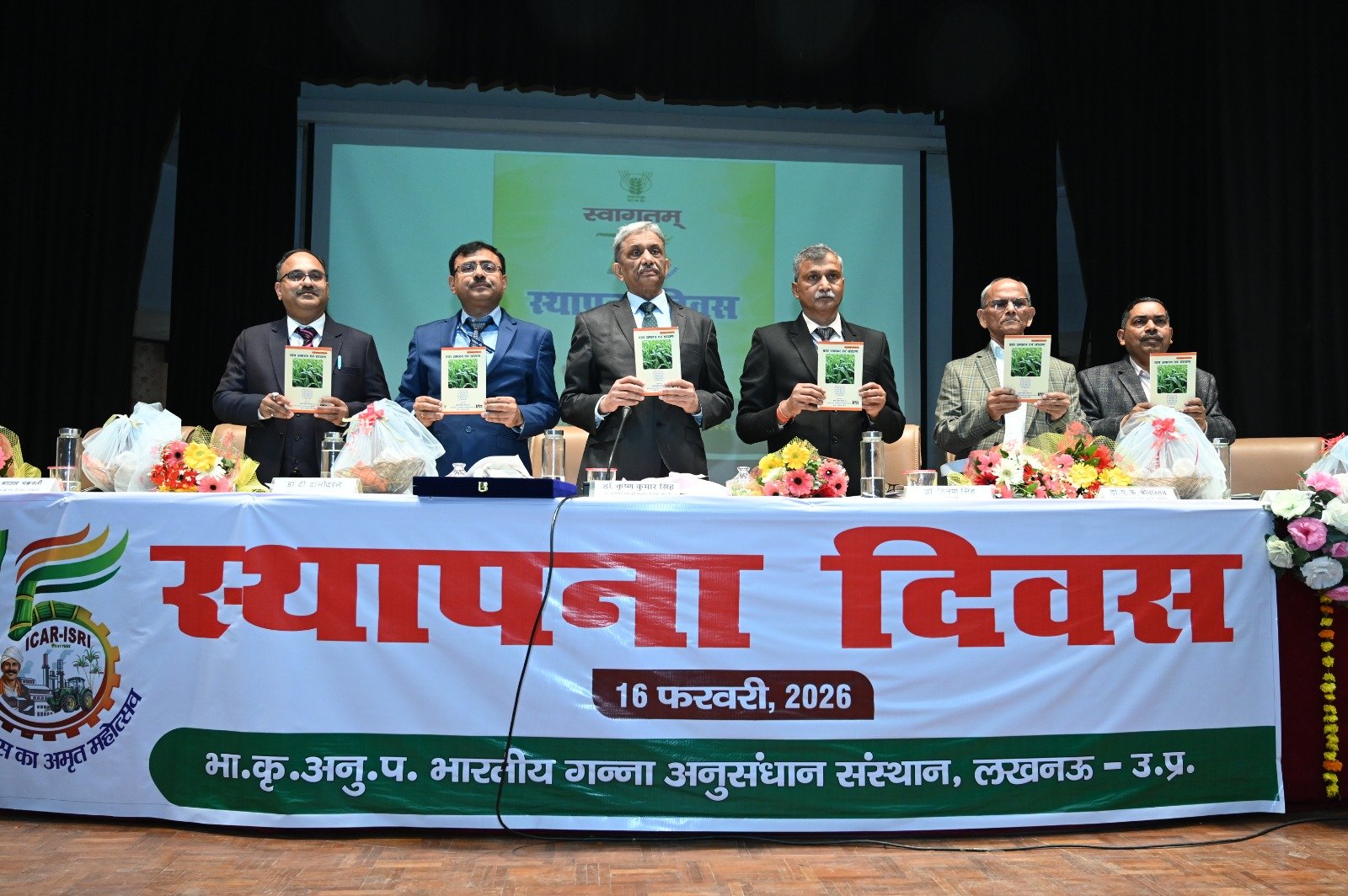
The ICAR-Indian Institute of Sugarcane Research (IISR), Lucknow, celebrated its 75th Foundation Day with great enthusiasm on February 16, 2026, marking a significant milestone in India’s sugarcane research and agricultural innovation.
The event highlighted the institute’s pioneering contributions to sugarcane farming, farmer welfare, and sustainable agriculture over the past 75 years.
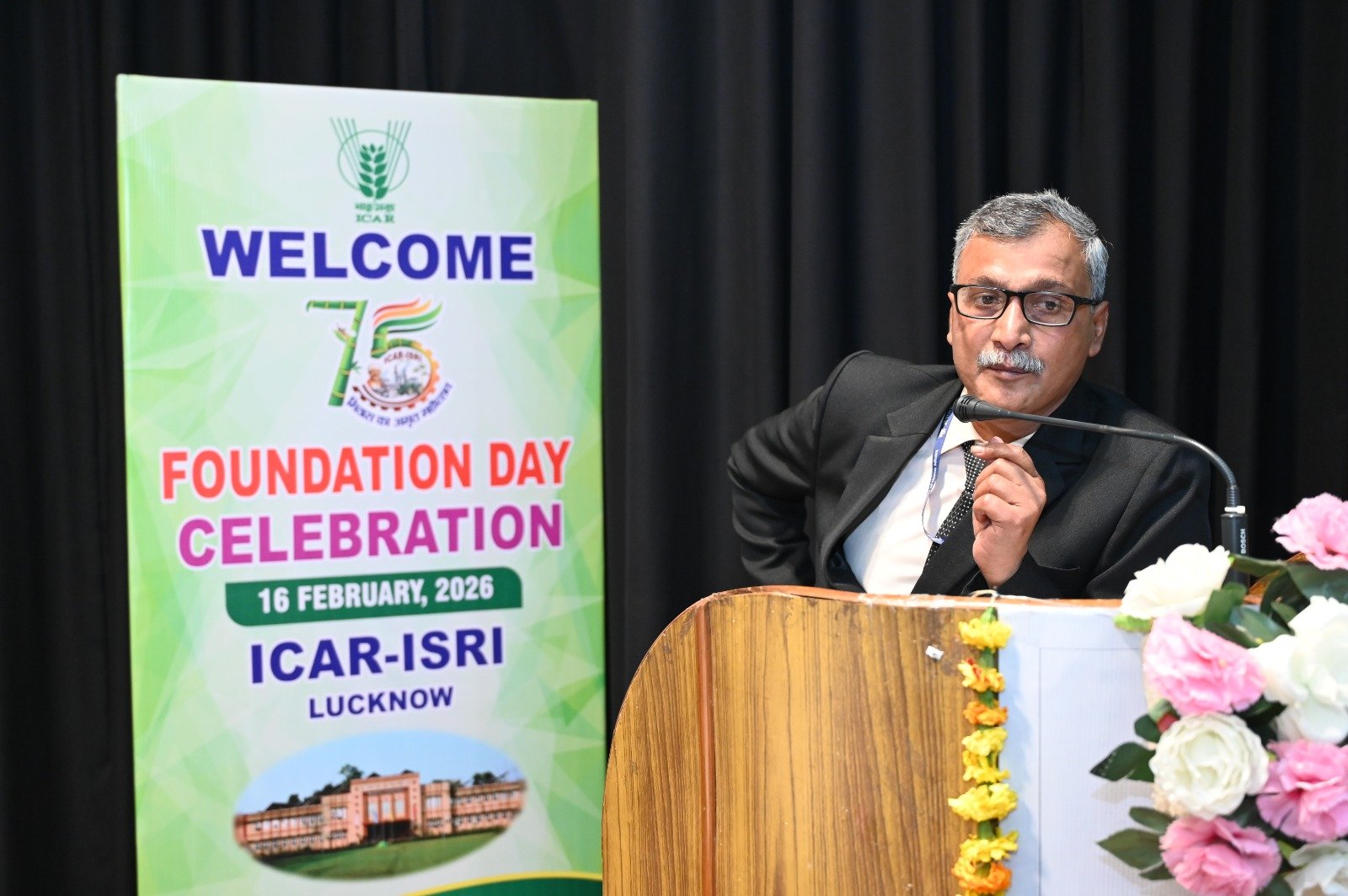
Chief Guest Prof. K.K. Singh, former Vice-Chancellor of Sardar Vallabhbhai Patel University of Agriculture and Technology, Meerut, praised IISR’s remarkable achievements. He specifically commended the development of over 50 high-yielding, climate-resilient, and high-sugar sugarcane varieties that perform well even under adverse conditions. Prof. Singh also highlighted the institute’s role in popularizing technologies such as skip-furrow planting, bud-chip method, integrated pest management, and value addition through jaggery processing units.
Looking ahead, he urged the institute to intensify efforts on key future challenges, including:
- Reducing carbon emissions from jaggery units
- Accelerating variety replacement with new and improved cultivars
- Developing standard operating procedures (SOPs) for reduced water use
- Ensuring quality seed availability
- Strengthening pest and disease management
- Addressing soil degradation
- Improving nitrogen use efficiency and correcting micronutrient deficiencies
- Lowering production costs
- Promoting mechanization and custom hiring centers
- Advancing digital agriculture
- Fostering collaborative projects
- Empowering youth through entrepreneurship programs and startup support
- Developing green technologies in bio-ethanol and bio-plastics
- Promoting effective intercropping systems
- Meeting the long-standing demand for small-scale sugarcane harvesting machines
Prof. Singh emphasized the need for systematic impact analysis of the institute’s technologies to better assess their reach and effectiveness.
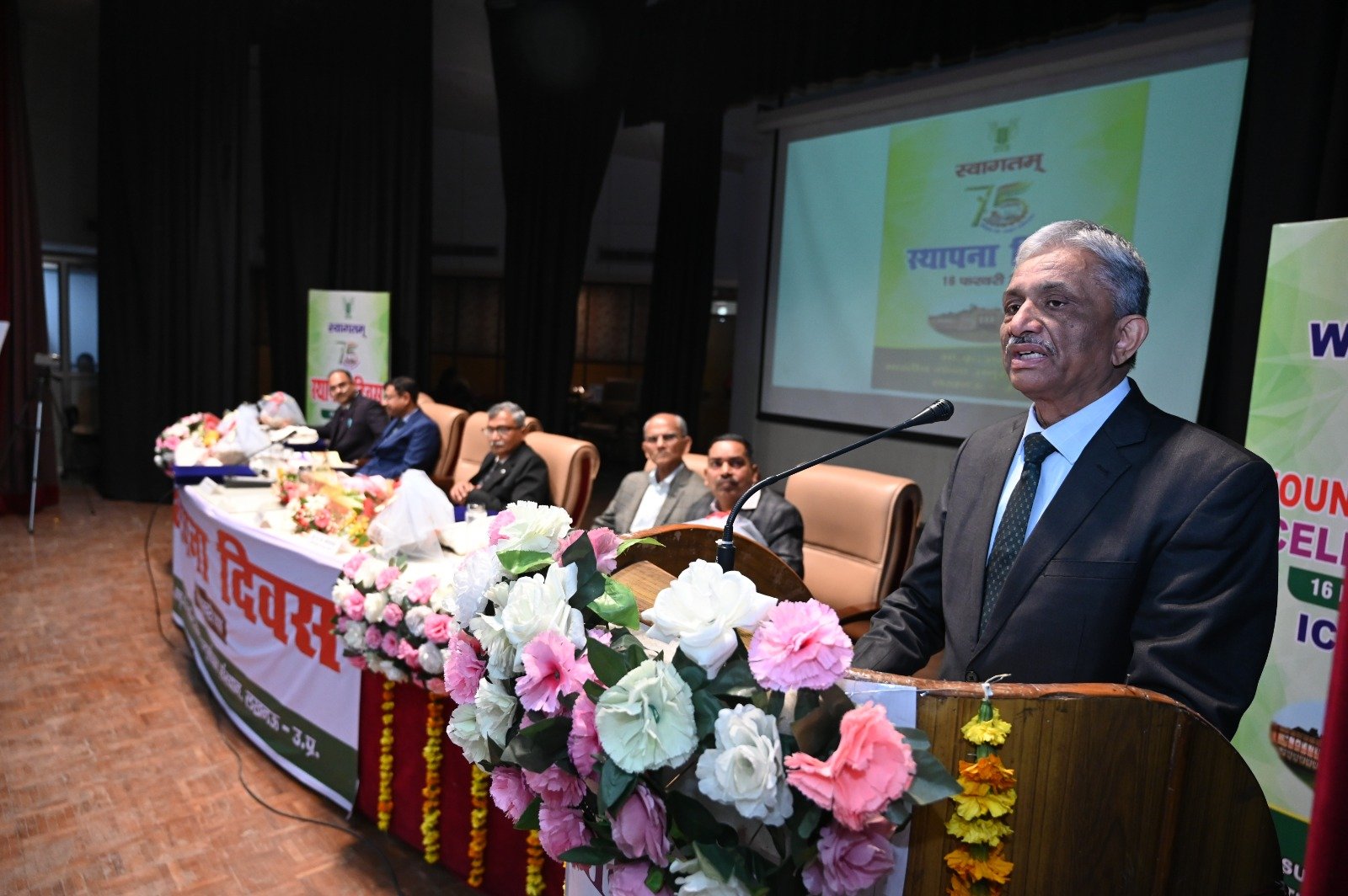
Dr. Dinesh Singh, Director of ICAR-IISR, shared key achievements from recent years. In 2025, 10 sugarcane varieties were registered with the Protection of Plant Varieties and Farmers’ Rights Authority (PPV&FRA). A proposal for identifying the mid-late variety CoLK 19204 (Ikshu-18) was submitted to the AICRP(S) Variety Identification Committee.
During 2024-25, the institute produced 10,150 quintals of seed cane and supplied over 21 lakh single-bud setts of newly released varieties (CoLK 16202 and CoLK 15466) through the Sugarcane Development Council. Additionally, around 6 lakh setts were distributed directly to farmers via online systems.
The variety CoLK 14201 saw exceptional demand, with its entire seed stock distributed in Uttar Pradesh. Projections indicate its cultivation area could expand to approximately 1.72 lakh hectares by 2025-26.
Dr. Singh also spotlighted advancements in new machinery, cutting-edge technologies, patents, copyrights, collaborations with various sugarcane and beet research organizations, outreach programs, and breeder seed production activities.
Guest of Honour Dr. Kajal Chakravarty, Director of ICAR-National Bureau of Fish Genetic Resources, Lucknow, described sugarcane as the backbone of farmers’ livelihoods. She lauded IISR’s contributions and called for greater focus on bio-ethanol and bio-plastics to enhance visibility and impact.
Dr. T. Damodaran, Director of ICAR-Central Institute for Subtropical Horticulture, Lucknow, noted IISR’s consistent support and stressed the ongoing need for farmer-friendly, commercially viable varieties. He highlighted the urgency of more work in bio-ethanol production and sensor-based irrigation systems for water conservation, given sugarcane’s high water requirements.
The occasion featured a special Foundation Day lecture on “Sugarcane: Indian Heritage” by Dr. A.K. Srivastava, former Head of Plant Physiology and Biochemistry. He described sugarcane as one of six crops that profoundly shaped human civilization, with references in ancient Indian texts like the Vedas, Puranas, Ravana Samhita, Ramayana, and Mahabharata underscoring its deep cultural and historical significance in India.
The program included the release of technical bulletins and folders, felicitations for staff and progressive farmers, and a street play (nukkad natak) by institute personnel. Dr. Anita Sawanani conducted the event, while Dr. Manoj Kumar Srivastava delivered the vote of thanks.
This milestone celebration reaffirms ICAR-IISR’s commitment to advancing sustainable sugarcane cultivation, supporting millions of farmers in Uttar Pradesh and beyond, and driving India’s journey toward self-reliant, eco-friendly agriculture.


