




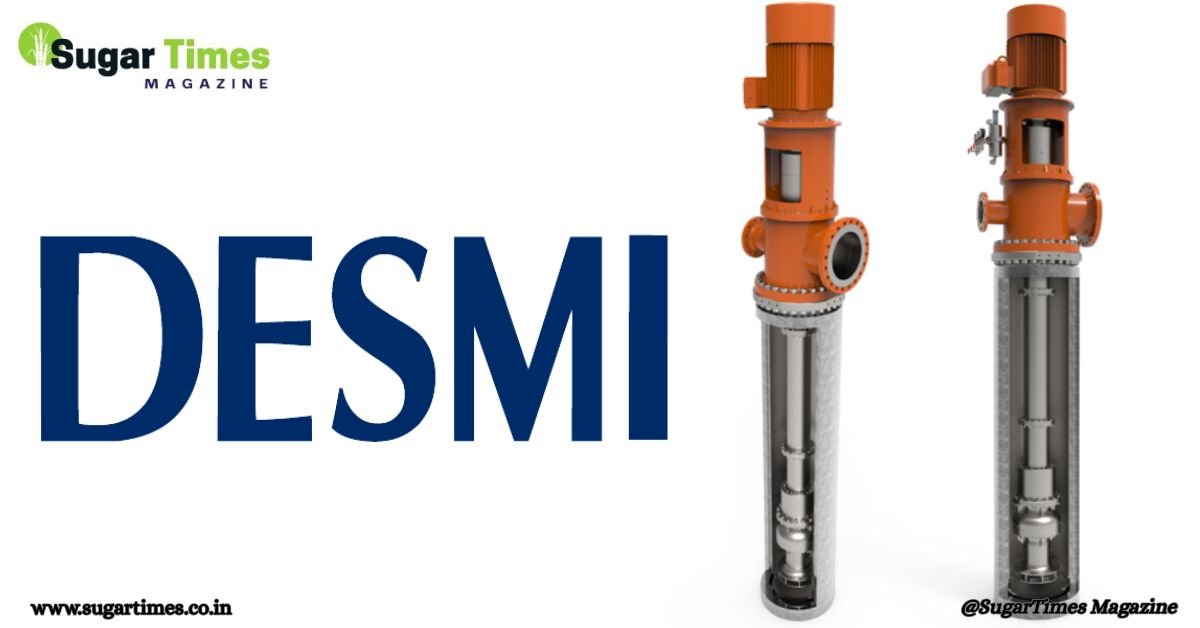
New DesCan pump developed from operational experience to support safe and reliable transfer of liquefied CO2 in emerging CO2 hubs, terminals and transport systems
As carbon capture and storage (CCS) projects move from pilot phase to large-scale infrastructure, the safe and reliable handling of liquefied CO2 is becoming a critical part of the value chain.
To support this development, DESMI is introducing DesCan, a canned deepwell pump developed specifically for the transfer of liquefied CO2 in terminals, hubs and transport infrastructure.
Liquefied CO2 must typically be transferred between capture plants, storage tanks, pipelines and ships. These operations place demanding requirements on pump technology due to the physical properties of the fluid and the conditions under which it is handled.
The DesCan pump is designed to address these challenges through a can-mounted vertical configuration where the pump is installed in a sump below the liquid level. This ensures flooded suction conditions and stable hydraulic operation, even in systems where the available NPSH margin is very limited.
“Carbon capture is only part of the equation. Once CO2 has been captured, it must be transported and stored safely and efficiently,” says Rasmus Folsø, Senior Vice President, New Green Solutions, DESMI.
“With DesCan we have applied our experience with deepwell pumps and liquid handling to develop a solution specifically suited for liquefied CO2 infrastructure.”
Developed from operational insights
The development of the DesCan pump builds on DESMI’s long experience with deepwell cargo pumps and fluid handling solutions in demanding industrial environments.
Through dialogue with customers and insights gained from previous projects, DESMI identified a growing need for pump solutions tailored specifically to liquefied CO2 applications.
Many pumps used in gas terminals today originate from LNG or LPG service. However, liquefied CO2 behaves differently in several important ways and places different demands on pump design and hydraulic performance.
Liquefied CO2 typically involves higher fluid density, very low NPSH margins near saturation conditions and increased sensitivity to local flashing at the pump inlet. These factors can make stable pump operation more challenging in CO2 transfer systems.
“Liquefied CO2 operates close to its saturation conditions and behaves differently from many traditional gas terminal fluids,” says Rasmus Folsø, Senior Vice President, New Green Solutions, DESMI. “That requires a different approach to pump design. DesCan has been developed specifically with theseoperating conditions in mind.”
Supporting the development of CCS infrastructure
Across Europe and globally, investments in carbon capture and storage are accelerating as industries seekpathways to reduce emissions.
Alongside capture technologies, the transport and storage of captured CO2 are becoming essential parts of the emerging CCS ecosystem. Terminals, hubs and storage facilities must handle large volumes of liquefied CO2 safely and efficiently, creating new requirements for the equipment used in these systems. Typical applications include CO2 hubs, ship loading terminals, truck unloading stations and transfer topipelines or intermediate storage.
By placing the hydraulic section below the liquid level, the can-mounted vertical design helps ensure stable operation and simplifies system layout compared with traditional horizontal pump installations.
This configuration provides the necessary suction conditions without requiring elevated storage tanks or pumps installed in deep pits. As a result, facilities can be designed with greater flexibility while reducing civilwork and avoiding pump pits that can create challenging maintenance access and HSE conditions.
As CCS infrastructure continues to expand, reliable fluid handling solutions will play an increasingly important role in enabling safe and efficient CO2 transport and storage.


