




The Government of India is actively working on several requests made by stakeholders in the sugar industry. The goal is to prevent excess sugar stocks from piling up while also ensuring that sugarcane farmers receive their payments on time.
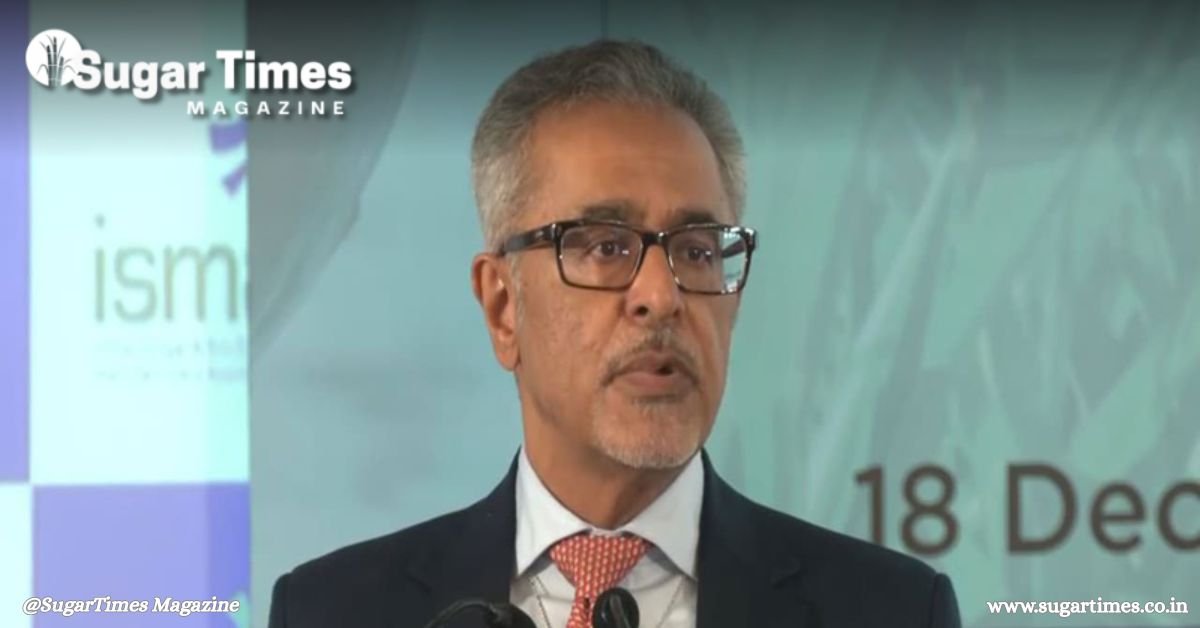
This was stated by Sanjeev Chopra, Secretary of the Department of Food and Public Distribution (DFPD), during the Annual General Meeting of the Indian Sugar and Bio-energy Manufacturers Association (ISMA).
Industry Demands Under Review
The sugar industry has asked the government to increase the Minimum Selling Price (MSP) of sugar and raise the procurement price for ethanol. According to Chopra, these concerns are being seriously considered by the government.
He said that progress has already been made on several issues raised by ISMA and assured stakeholders that the government is working toward solutions that will benefit everyone involved in the sugar sector.
Sugarcane Production Expected to Rise
Chopra also shared positive news about sugarcane production. The area used for sugarcane farming is expected to increase from 54.5 lakh hectares in 2024-25 to 56.93 lakh hectares in 2025-26.
As a result, sugarcane production is likely to grow by about 5%, reaching 47.56 lakh tonnes in 2025-26, compared to 45.46 lakh tonnes in the previous season.
The government estimates that total sugar production for the current season will be around 343 lakh tonnes, which matches ISMA’s projections. Chopra said this alignment of estimates will make policy decisions easier.
Managing Surplus Sugar
The government has been using the ethanol blending program, introduced under the National Bio-Energy Policy of 2018, to help manage excess sugar. This program allows sugar to be converted into ethanol, providing another source of income for sugar mills.
However, this year only 28% of ethanol feedstock has come from sugarcane, while 72% has come from grains. Because of this, only about 34 lakh tonnes of sugar are expected to be diverted for ethanol production, which is lower than earlier expectations.
Sugar Exports Allowed
To help reduce surplus stocks, the government has allowed the export of 15 lakh tonnes of sugar. Chopra said export profitability is currently a concern, but the situation may improve after the Brazilian sugar season ends soon.
New Sugar Regulation Coming
Chopra also announced that the government has drafted a new Sugar Control Order, 2025, which will replace the old regulation from 1996.
The new rules aim to improve transparency and efficiency by using digital systems that will allow real-time data sharing between the government and sugar mills.
The draft will soon be released for public consultation, allowing industry stakeholders to share their feedback before the final version is implemented.


