




India’s sugar industry is moving into a new phase—becoming more efficient, technology-driven, and aligned with the country’s clean energy goals.
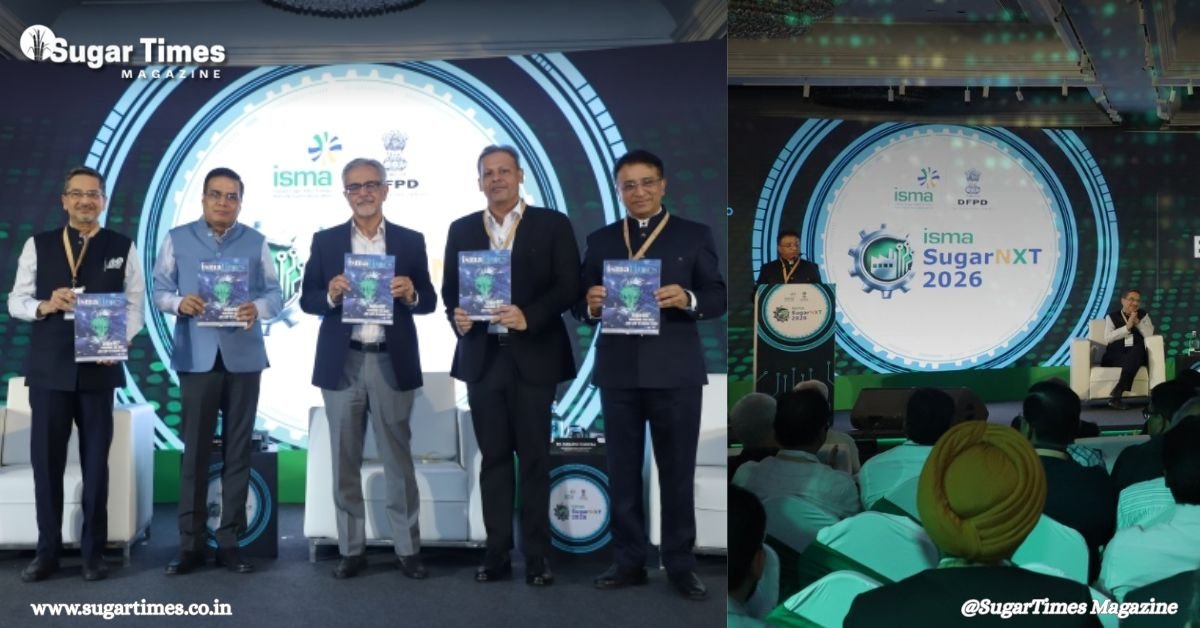
This transformation was highlighted at SugarNXT 2026, a two-day conclave organised by the Indian Sugar & Bio-Energy Manufacturers Association. The event brought together policymakers, industry leaders, and technology experts to discuss how innovation is reshaping the sector.
The conclave was inaugurated by Sanjeev Chopra, Secretary, Department of Food & Public Distribution, with Ashwini Srivastava as the Guest of Honour. Speakers emphasised that the future of the industry will depend on smarter operations, lower energy use, and better use of real-time data.
Sanjeev Chopra noted that over the past decade, India’s sugar industry has shown strong resilience and has become an important part of the country’s bio-energy ecosystem. He highlighted the success of the 20% ethanol blending programme, which has helped save nearly ₹1.65 lakh crore in crude oil costs. Going forward, he stressed the need to improve plant-level efficiency, adopt data-driven systems, and optimise processes.
Industry leaders agreed that the sector is undergoing a major structural shift. Niraj Shirgaokar, President of ISMA, said the industry is moving from a cyclical commodity business to a more stable and diversified bio-energy sector. He added that improving cost competitiveness and making better use of byproducts will be key to future growth.
Deepak Ballani, Director General of ISMA, emphasised that the next phase of growth will depend on execution at the ground level. He said sugar mills must focus on optimising operations, using data for real-time decisions, and reducing energy and water consumption.
Experts at the event showcased how modern technologies such as automation, artificial intelligence, and real-time monitoring are already helping mills improve efficiency. These tools are reducing energy use, increasing sugar recovery, cutting downtime, and generating more value from byproducts.
Energy efficiency emerged as a key focus area, with discussions around advanced evaporation systems, heat integration, and better cogeneration methods to reduce costs and improve profitability.
Overall, SugarNXT 2026 outlined a complete roadmap for the industry—from sugarcane processing to final production—aimed at building a more digital, cost-efficient, and future-ready sugar ecosystem.


