




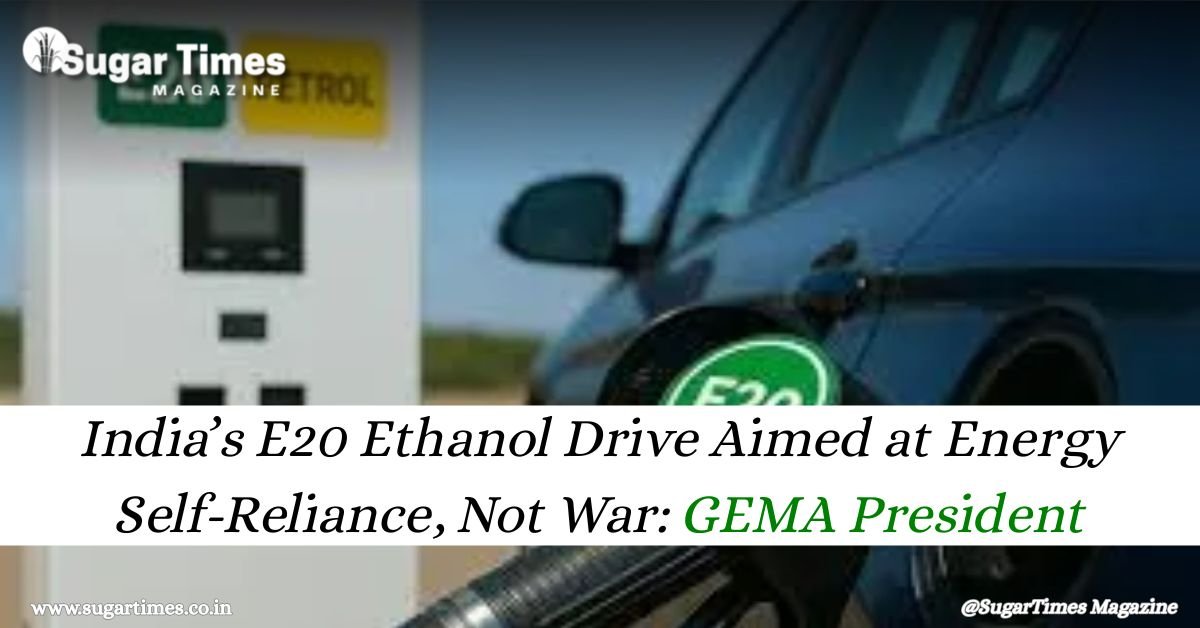
New Delhi, April 4: India’s move to introduce 20% ethanol blending in petrol (E20) is primarily aimed at achieving long-term energy self-reliance and is not a response to geopolitical tensions such as the ongoing conflict in the Middle East, according to C K Jain, President of the Grains Ethanol Manufacturers Association.
Speaking to ANI, Jain said the concept behind E20 is simple—reducing India’s dependence on imported energy. “The E20 programme is not based on war. It is about self-reliance in energy. When we have our own agricultural produce, why should we depend on others?” he said.
India began the nationwide rollout of E20 petrol on April 1. Jain described this milestone as a checkpoint rather than the final destination, explaining that the programme has already confirmed both the availability of feedstock and investor interest in ethanol production.
According to him, India currently has sufficient surplus grain and installed capacity to produce ethanol. Therefore, the 20% blending level should serve as a starting point for further expansion. “There is every possibility that blending can be increased to 25–27% in the future,” he said.
India’s ethanol production capacity has already reached around 2,000 crore litres and is expected to increase by about 10% with projects currently under development. However, the requirement for achieving 20% blending is estimated at 1,300–1,400 crore litres, including roughly 1,200–1,250 crore litres supplied to oil marketing companies.
Jain noted that many ethanol plants established in the past three years are currently operating at only 40–50% of their capacity, which could create financial pressure for investors. He warned that underutilisation of these plants could potentially lead to non-performing assets (NPAs) of nearly ₹50,000 crore if demand does not increase.
Despite this, the ethanol blending programme has already delivered major economic benefits. Jain said India saved about ₹40,000 crore in crude oil imports during 2024–25, and nearly 75% of this value ultimately reaches farmers and rural areas, strengthening the rural economy.
On feedstock availability, he said the country has adequate surplus stocks even after meeting domestic food requirements. For instance, the Food Corporation of India currently holds more than 200 lakh tonnes of surplus rice, which could potentially produce around 500 crore litres of ethanol. Surplus maize and other grains are also available after fulfilling public distribution and domestic demand.
At present, grain-based ethanol accounts for about 70% of total supply, while sugarcane-based ethanol contributes roughly 30%.
Addressing concerns about the impact of higher ethanol blending on vehicles, Jain said the reduction in mileage is minimal and that vehicles operating with 20% ethanol blends have not reported major issues.

Looking ahead, he suggested expanding ethanol use beyond transport fuels. One potential area is ethanol-based cooking stoves, which could eventually become an alternative to LPG, especially for commercial users. He noted that ethanol prices are gradually declining while LPG prices are rising, suggesting the two could become competitive over time.
Jain also highlighted potential risks from global energy supply disruptions. Reduced availability of liquefied natural gas (LNG) could affect fertiliser production, although he said there is no immediate cause for concern and Indian farmers are capable of managing the situation.


