




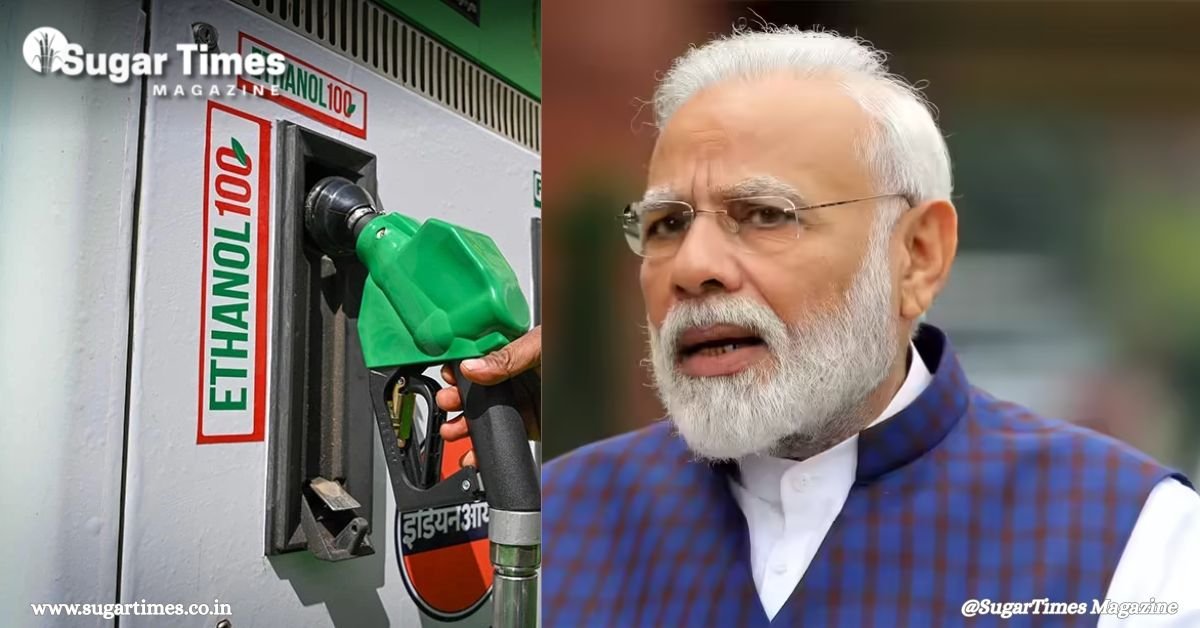
Noida: Prime Minister Narendra Modi on Saturday emphasized the importance of ethanol blending in petrol as a major step toward reducing India’s dependence on crude oil imports. He made these remarks while inaugurating the Noida International Airport in Jewar, noting that global energy markets have become unstable due to the ongoing conflict in West Asia.
The Prime Minister said that without ethanol blending, India would have needed to import an additional 4.5 crore barrels of crude oil every year, equivalent to about 700 crore litres. He credited farmers for supporting the ethanol programme, saying their contribution has helped the country during the current global crisis.
According to Modi, the ethanol blending initiative has not only strengthened the nation’s energy security but has also benefited farmers. The programme has helped India save around ₹1.5 lakh crore in foreign exchange by reducing crude oil imports. Jewar, where the new airport has been built, is located near the sugarcane-growing regions of western Uttar Pradesh, where sugarcane is a key raw material used for ethanol production.
In a recent address in Parliament, Modi highlighted the rapid progress of ethanol blending in India. About a decade ago, ethanol blending in petrol was only around 1–1.5%, but it has now reached nearly 20%. This progress has helped reduce crude oil imports by roughly 4.5 crore barrels every year. He also mentioned other energy-saving initiatives, such as the electrification of railways, which has reduced diesel consumption by around 180 crore litres annually, along with the expansion of metro rail networks.
India achieved its target of 20% ethanol blending with petrol (E20) ahead of schedule in 2025. The programme is aimed at lowering fuel import costs and reducing carbon emissions. The All India Distillers’ Association has also indicated its readiness to supply ethanol blends exceeding the 20% level. Currently, India’s ethanol sector has a total production capacity of around 2,000 crore litres, with more than 1,000 crore litres being used for blending with petrol.
During his speech in Jewar, Modi also spoke about rising crude oil prices caused by tensions linked to the US–Israel war with Iran. He assured that the government has taken steps to secure fuel supplies and protect consumers from rising petrol and diesel prices.
He said India continues to import fuel from regions affected by the conflict but has taken all possible measures to ensure that citizens do not face difficulties due to the global situation. Although crude oil prices have increased internationally, retail fuel prices in India have remained stable.
The Prime Minister added that the government has discussed the issue in Parliament and has also consulted chief ministers of different states. He urged political leaders and citizens to approach the situation with unity and responsibility, stressing that the current energy challenge is part of a broader global crisis.


