




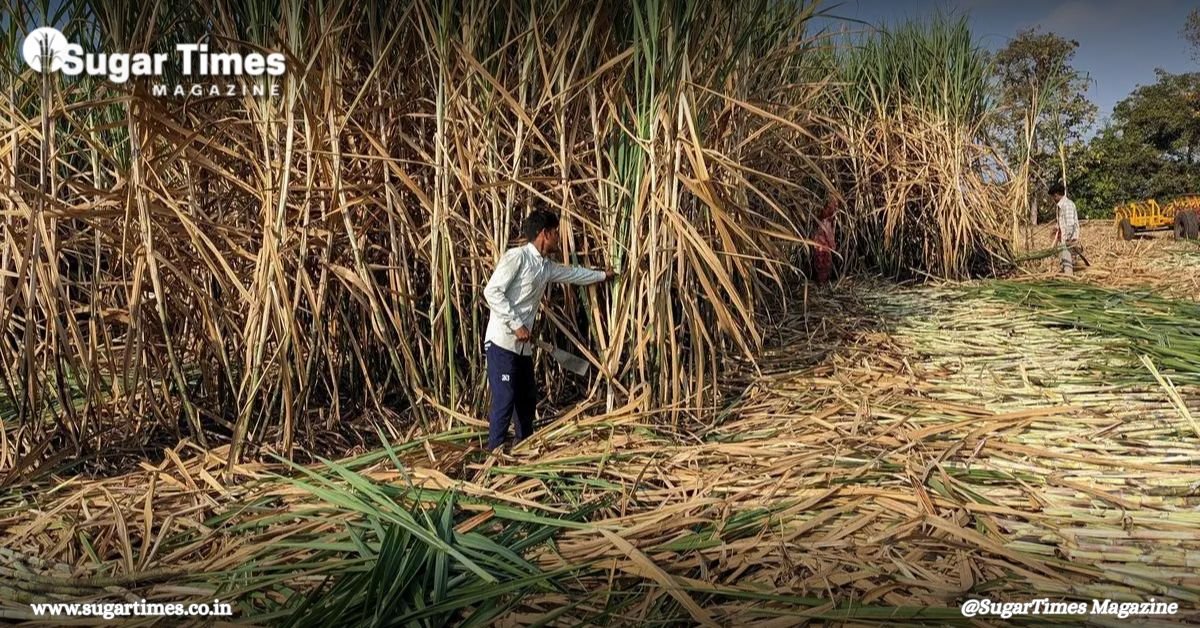
The sugar industry in Maharashtra is heading toward a bigger crisis as a severe shortage of sugarcane has forced most mills to shut operations early this season. The situation could worsen further if drought conditions hit during the upcoming kharif season.
So far, at least 179 sugar mills have stopped crushing due to a lack of cane supply. Out of 202 mills, more than 85% have already closed, leaving only 28 still operational.
Officials warn that if an El Niño-triggered drought affects Maharashtra, the government may need to discourage sugarcane cultivation, as it is a highly water-intensive crop. Instead, farmers may be encouraged to shift to less water-dependent crops like millets and pulses. Agricultural universities are being involved to guide farmers on crop diversification.
The state agriculture department has also been asked to begin pre-monsoon planning early, especially for drought-prone districts in Vidarbha and Marathwada.
Data from the Sugar Commissioner shows that 172 mills have already completed crushing this season—much higher than 103 mills during the same period last year. Regions like Solapur, Kolhapur, Pune, and Nanded have seen the largest number of closures.
Sugar production has dropped sharply this season. Maharashtra has produced 791.15 lakh quintals so far, compared to 1,046.85 lakh quintals last year. Similarly, sugarcane crushing stands at 837.31 lakh tonnes, significantly lower than 1,029.98 lakh tonnes during the same period last season. The recovery rate has also declined to 9.45% from 10.16%.

Unseasonal rains have further affected sugarcane yields, worsening supply shortages for mills.
At the same time, sugar mills are facing financial pressure. Industry players are urging the government to provide subsidies and increase the Minimum Support Price (MSP), which they say has not kept pace with rising production costs. The current sugar price, fixed at ₹36 per kg, has also remained unchanged, adding to their concerns.
Adding to the challenges, uncertainty in export markets due to geopolitical tensions in West Asia has impacted mills that previously relied on exports for profits.
Industry experts describe the situation as a “Catch-22,” with mills facing difficulties both domestically and globally.
According to senior NCP leader Dilip Walse Patil, sugarcane production in the state has fallen by around 15% this year due to adverse weather, leading to a shorter crushing season of less than 100 days. This has resulted in estimated losses of ₹3,300 crore for the industry, while ₹4,315 crore in payments to farmers are still pending.
Leaders and farmer groups are now calling for urgent government intervention, including a revival package for the cooperative sector. Farmer leader Raju Shetti emphasized that the gap between low MSP and high production costs is pushing mills into losses.
The sugar sector plays a crucial role in the rural economy, supporting farmers’ incomes, mill operations, and generating around ₹8,000 crore annually in taxes. The industry’s total turnover is estimated between ₹50,000 crore and ₹60,000 crore.
With falling production, financial stress, and looming drought risks, the sector faces a challenging road ahead.


