




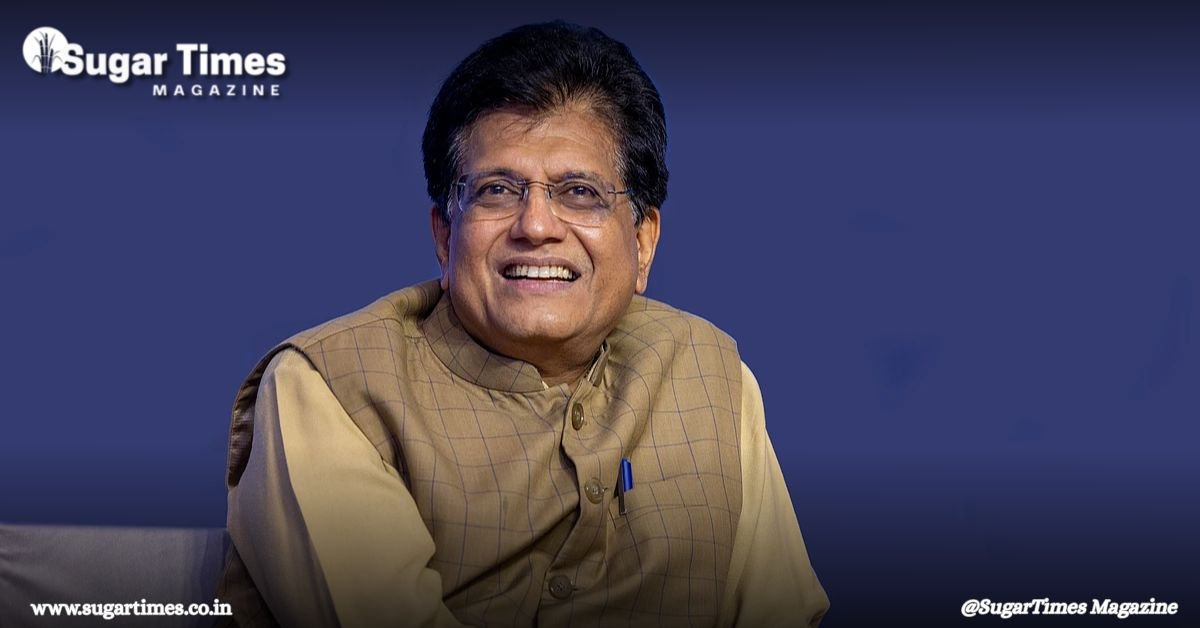
Commerce and Industry Minister Piyush Goyal on Tuesday said that India’s annual exports of food and agricultural products are approaching the ₹5 lakh crore mark, highlighting the strong growth in the country’s agri-export sector.
Speaking at the inauguration of the 40th edition of AAHAR – The International Food & Hospitality Fair in New Delhi, the minister urged stakeholders from the food, agriculture and hospitality industries to work together to make India the world’s largest exporter of agricultural and processed food products. He said the rising global demand for Indian products and the country’s expanding trade agreements offer major opportunities for growth.
Goyal noted that India currently exports nearly ₹5 lakh crore (over $55 billion) worth of food and agricultural products every year, including farm produce and fisheries. This makes India the seventh-largest exporter of agricultural products globally.
According to the minister, India’s agri and food exports have grown significantly over the past decade, between 2014 and 2025. During this period, exports of processed foods have increased four times, while fruit and pulses exports have tripled. Processed vegetable exports have also quadrupled, cocoa exports have tripled, and cereal exports have doubled. Rice exports alone have risen by 62 percent.
He said these achievements should motivate the country to aim for the top position in global agricultural and processed food exports. The goal aligns with the vision of Prime Minister Narendra Modi to make India the “food basket of the world.”
The minister also highlighted that India has signed nine Free Trade Agreements (FTAs) in the past three and a half years, providing access to markets in 38 developed countries. These agreements, he said, have created significant opportunities for Indian exporters and expanded the country’s global trade reach.
Goyal added that India now enjoys preferential market access to nearly two-thirds of global trade, which strengthens its position as an attractive destination for investment and helps Indian businesses integrate into global value chains.
At the same time, he assured that the government has protected the interests of domestic stakeholders—especially farmers, fishermen and MSMEs—while negotiating trade agreements. Sensitive sectors such as dairy have been safeguarded, with no concessions given to foreign producers. Similarly, genetically modified (GM) products have not been granted duty concessions or market access.
He further said that key agricultural commodities including rice, wheat, maize, soy meal and several varieties of pulses have also been protected during trade negotiations. In the sugar sector, concessions have generally not been offered in order to safeguard the interests of India’s sugarcane farmers and domestic producers.
The minister said these steps ensure that India’s domestic industries remain protected while new international opportunities open up for Indian products. He also urged industry stakeholders to spread awareness about how India’s FTAs support national interests while expanding global trade.
Goyal encouraged farmers and entrepreneurs to take advantage of the ₹1 lakh crore Agriculture Infrastructure Fund and invest in food processing and value addition, which can help farmers access higher-value global markets. He added that more small enterprises are entering the food processing sector, creating new opportunities for growth and employment.
He also announced that this year’s AAHAR exhibition features Italy as the partner country. The event will be opened to the general public on March 13 and throughout Saturday, allowing visitors—especially young people—to explore the strengths of the food, beverage and hospitality industries from India and around the world.


