




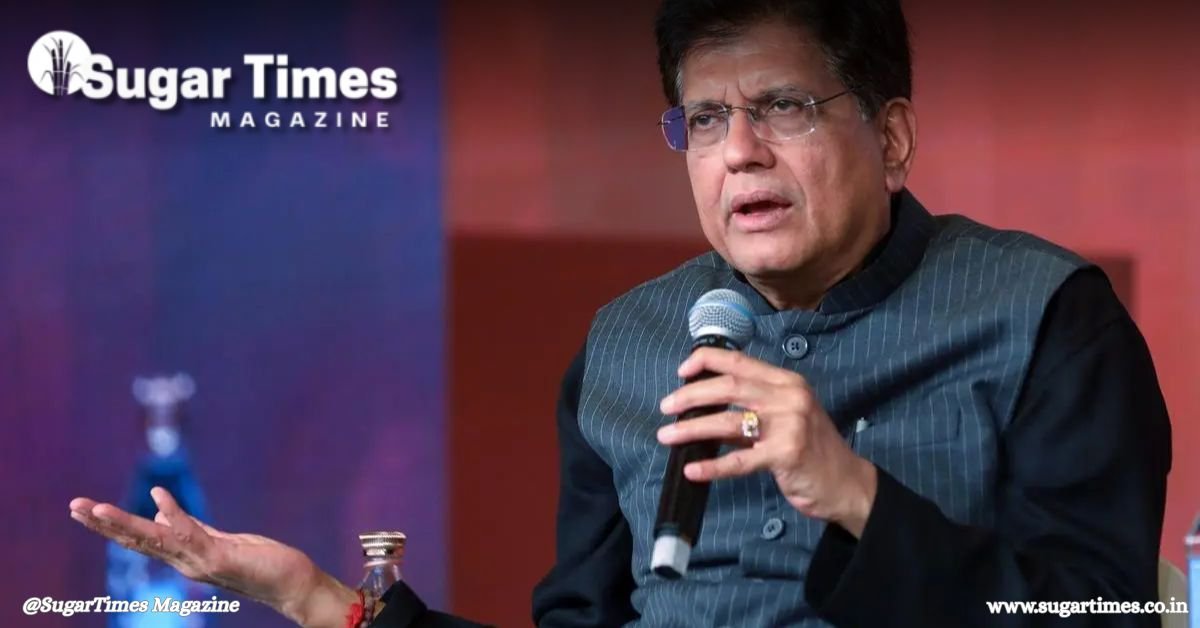
India’s agricultural exports are expected to touch $55 billion by 2025, according to Commerce and Industry Minister Piyush Goyal. The announcement highlights the rising global demand for farm products from India and marks an important milestone for the country’s agriculture sector.
At the same time, the government has made its position clear on agricultural imports. Goyal stated that India will not offer any tariff concessions on sugar imports in any trade agreement, reinforcing the country’s effort to protect domestic farmers.
Government taking a firm stand in trade talks
Earlier this year, Goyal also revealed that India had kept some sensitive agricultural sectors out of its trade negotiations with the United States. These sectors include genetically modified (GM) crops and dairy products.
Speaking to reporters, he said the government is focused on safeguarding the interests of farmers and livestock owners. Because of this, products such as GM crops, meat, poultry, dairy, rice, wheat, and sugar will not be allowed to enter Indian markets at lower import duties.
He added that India has not fully opened its agricultural sector to foreign competition, especially for products where the country already produces enough for its own needs.
Protecting India’s agricultural self-reliance
Goyal further explained that several other agricultural commodities have also been kept out of trade discussions to protect the country’s farming system. These include soybean, maize, bananas, citrus fruits, green tea, oilseeds, and ethanol, which will not receive tariff concessions.
Benefits for Indian exporters
While India has taken a cautious approach toward imports, it has secured advantages for its exports under the proposed trade arrangement with the United States. The U.S. has agreed to grant India a “most preferred” duty status, reducing reciprocal tariffs from 50% to 18%.
According to Goyal, the lower tariff rate will make Indian exporters more competitive globally and is expected to bring new orders for Indian manufacturers, creating fresh economic opportunities for the country.


